G20 Johannesburg: Africa Steps to the Centre as Leaders Back Global Climate and Energy Reforms
#g20 #g20summit #geopolitics
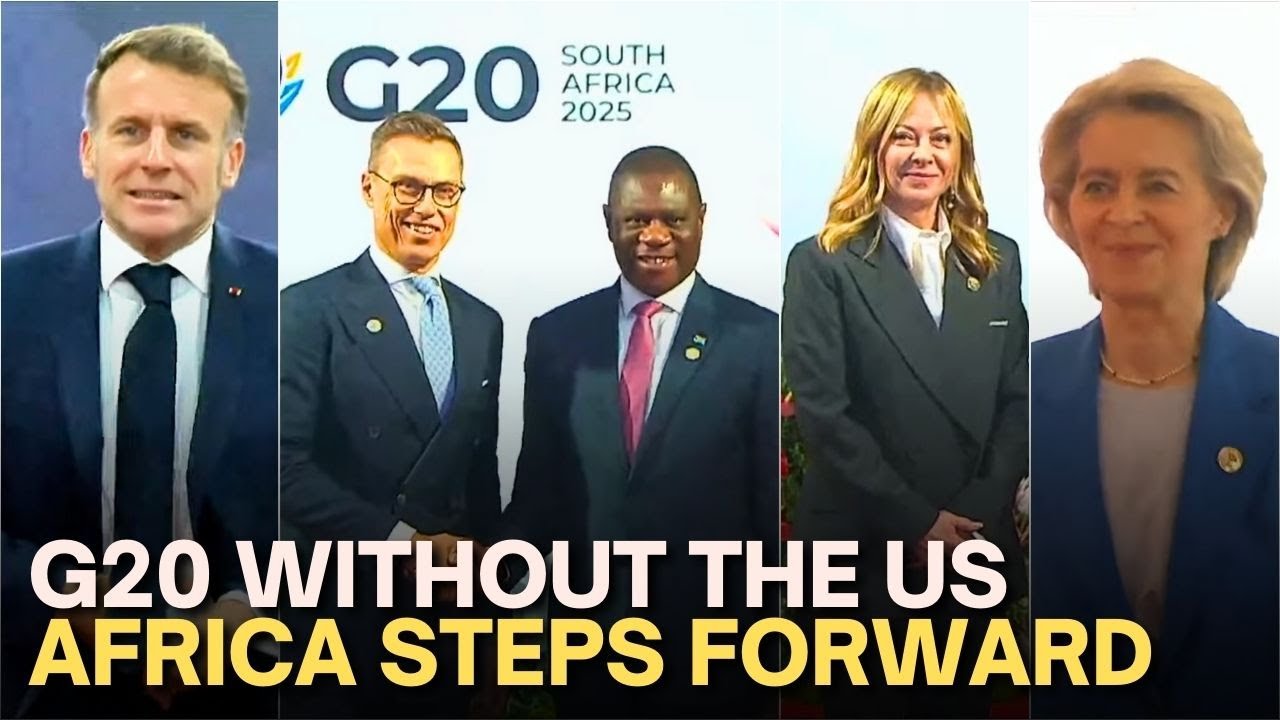
The 2025 G20 Summit in Johannesburg marked a historic first: the world’s largest economies meeting on African soil under the South African presidency. With the theme “Solidarity, Equality, Sustainability,” host President Cyril Ramaphosa set the tone early — and the summit immediately became a symbol of shifting global power dynamics.
Most notably, the United States left its seat empty. The Trump administration boycotted the summit, criticising South Africa’s climate agenda and internal policies. But rather than weaken the gathering, the absence of Washington accelerated a major political message: the rest of the G20 is increasingly willing to move forward without US approval.
Leaders adopted a 122-point declaration at the very start of the summit — an unusual break from tradition — committing to greater support for developing economies, stronger climate adaptation efforts, and more financing for clean energy, especially across Africa.
Finland Calls for Fair Multilateralism
One of the most straightforward statements came from Finland’s President Alexander Stubb. Representing Finland at the G20 for the first time, Stubb argued that the world faces a stark choice between multilateralism based on rules and institutions, and multipolarity driven by raw transactions. While multipolarity gives more power to individual states, he warned it often leads to instability and greater risk of conflict.
Stubb also acknowledged that many global institutions created after 1945 no longer reflect today’s reality. To rebuild trust in multilateralism, he said, Western countries must accept a fairer distribution of power and influence.
United Kingdom Pushes a Five-Point Growth Agenda
UK Prime Minister Keir Starmer framed his remarks around economic resilience. He called for a shared global mission to deliver “good jobs, lower bills, higher growth and better living standards.”
Starmer presented a five-point plan focused on:
⦁ addressing global imbalances
⦁ reopening and stabilising trade
⦁ improving economic resilience through clean energy
⦁ modernising international rules for digital and environmental trade
⦁ and tackling the challenges facing emerging economies, particularly in Africa
His message aligned with South Africa’s priorities: growth, fairness, and new opportunities for developing nations.
Climate Impacts and Rising Vulnerability
Canadian Prime Minister Mark Carney delivered a sharp warning on climate risk. He highlighted how extreme events — from Canada’s record wildfires to devastating storms in the Caribbean — show that yesterday’s “tail risks” have become today’s mainstream reality.
Carney called for stronger investment in mitigation, adaptation, early warning systems, and innovative climate finance.
UN Secretary-General António Guterres reinforced this urgency. He said that overshooting the 1.5°C temperature threshold is now inevitable, with Africa facing the harshest consequences despite contributing least to global emissions. Guterres urged developed countries to double adaptation finance immediately and triple it by 2030, alongside major reforms to global finance.
Competing Visions for Energy Transition
Energy policy became one of the summit’s most vivid points of contrast.
Italy’s Prime Minister Giorgia Meloni warned against “ideological dogmatism,” arguing that developing nations need pragmatic, diversified approaches — not one-size-fits-all climate rules. She highlighted Italy’s investments in African renewables, agriculture, and desert reclamation.
European Commission President Ursula von der Leyen presented a more optimistic message: clean energy technologies are now cheaper, scalable, and a major economic opportunity. Yet of the two trillion dollars invested globally in clean energy last year, only around two percent went to Africa — despite the continent having 600 million people without electricity.
Through the EU’s Global Gateway initiative and new partnerships with South Africa, Europe announced €15.5 billion in new pledges for African renewables, grids and infrastructure.
A Summit That Reflects a Changing World
The Johannesburg G20 underlined a clear shift: Africa is no longer a passive participant but an emerging centre of global climate and energy strategy. And with major powers absent, the remaining G20 members chose to act rather than wait.
From debates on fair multilateralism to urgent calls for climate adaptation and long-term energy investment, the summit showed a world moving — economically and politically — toward the global South and East.
Whether these commitments translate into real change now depends on implementation, financing, and cooperation beyond the summit stage.
——————————————————
*Subscribe to Europe Pulse*
Stay updated with the latest news from Europe.