
EU and Albania Open Final Negotiation Cluster, Completing Full Set of Accession Chapters
#eu #albania #geopolitics
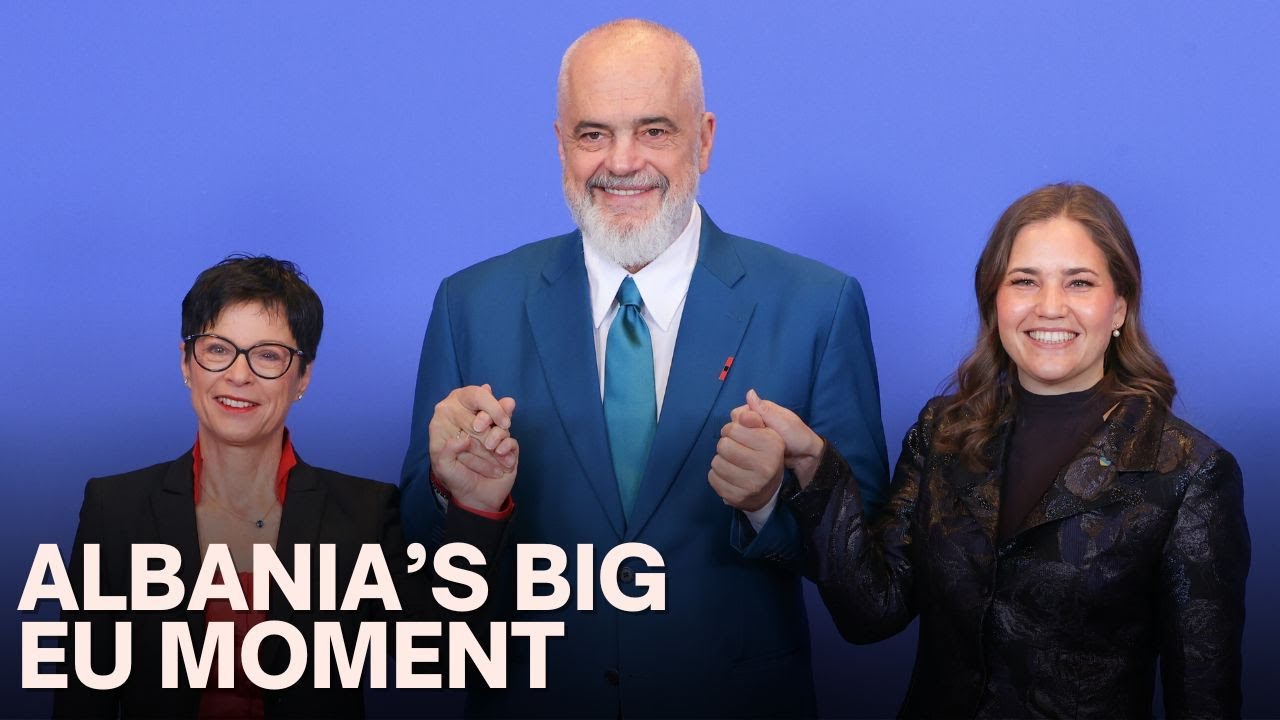
The European Union and Albania have reached a major milestone in Brussels with the opening of Cluster 5 in Albania’s accession talks, completing the opening of all six negotiation clusters. The announcement came at an EU–Albania Intergovernmental Conference attended by Danish Minister for European Affairs Marie Bjerre, EU Commissioner for Enlargement Marta Kos, and Albanian Prime Minister Edi Rama. Cluster 5 covers “Resources, Agriculture and Cohesion,” and its launch means every group of chapters in Albania’s accession process is now formally under negotiation.
Marie Bjerre hailed the development as “record speed,” noting that the first cluster was opened only in September last year and that all six have now been opened in just over a year, including two under the Danish EU Council Presidency.
She praised Albania’s strong focus on reforms, EU legal alignment, and implementation, calling today’s step “recognition of Albania’s hard work towards its European future.” The Danish minister stressed that the next crucial phase is meeting interim benchmarks under the “fundamentals” cluster, which will allow the EU and Albania to start closing individual negotiation chapters. She urged Albania to maintain reform momentum and inclusive political dialogue, insisting that both the EU and Albania grow stronger through enlargement.
EU Enlargement Commissioner Marta Kos described the day as special not only for Albania but for the European Union, saying it proves that “the EU offer works” when candidate countries deliver. She called Albania “the best example of the transformative power of enlargement,” pointing to visible changes in the political system, economy, and society as EU-related reforms advance.
Kos stressed that the real prize now is closing clusters, not just opening them, and urged acceleration in key areas such as justice reform, judicial independence, the fight against corruption, property rights, minority rights, and media freedom. More than 90% of Albanians see their future in the EU, giving Albania the broadest public backing of any candidate country and a powerful mandate to continue reforms.
Addressing Albanian citizens directly, Kos said, “This is all your work,” emphasising that EU institutions can support and guide, but implementation happens in Albania. She reassured sceptical voices that doubt and questions are natural in a democracy and promised continued outreach both in Albania and within EU member states. Bjerre echoed that message, calling today a “huge milestone” and an inspiration for other candidates across the Western Balkans, while warning that negotiations ahead will be demanding and “there will be bumps on the way.”
Prime Minister Edi Rama called the moment “something that seemed impossible” not long ago, recalling years of setbacks he described as “pushbacks, slaps and punches.” He argued that the difficult path has made Albania stronger, more mature, and more aware of the stakes of EU accession. Rama stressed that he and his government represent “a whole nation” overwhelmingly backing EU membership, joking that the small minority in opinion polls who say otherwise probably “did not have a good day” when surveyed.
Rama restated Albania’s ambition to conclude accession negotiations by 2027 and then move into the final phase of political support leading to full membership. He warned Albanians never to take anything for granted in Brussels, advising them to enjoy EU smiles but to “keep going and do the hard work” with humility and concrete results. The prime minister said the accession process itself has already changed Albania far beyond technical clusters and chapters, helping build institutions rooted in the rule of law and European standards.
Responding to a question about sceptics who fear EU membership will never materialise, Rama compared the process to a long education: repeated exams, strict feedback and occasional failure, but a rewarding outcome for those who persist. He also offered a characteristically colourful historical comparison, noting that Albania had previously been “all in” with empires from the Ottomans to the Soviets and Chinese by imposition, whereas the EU is “the first empire we want to be with by choice.”
——————————————————
*Subscribe to Europe Pulse*
Stay updated with the latest news from Europe.
