
Denmark Leads the Digital Child Safety Debate
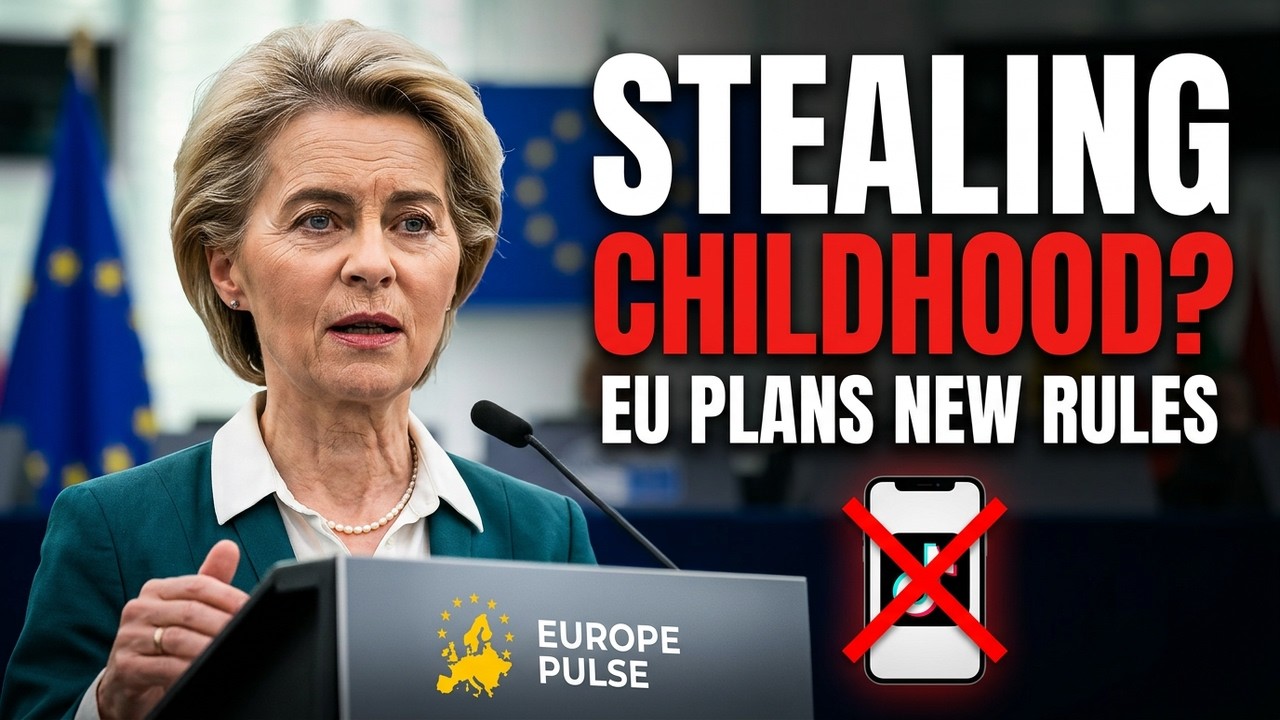
At the Copenhagen Summit 2026, European Commission President Ursula von der Leyen delivered a stark and urgent warning: social media platforms are actively “stealing childhoods.” In a powerful address, von der Leyen unveiled a bold EU plan designed to protect children from the insidious grip of digital addiction and give young people their formative years back. Her message resonated deeply, positioning Denmark and the wider EU at the forefront of a global movement to redefine child safety in the digital age.
Children Are Not Little Adults: Mental Health Risks Online
Von der Leyen emphatically stated that children are not merely “little adults.” She highlighted how the digital landscape exposes them to constant comparison, relentless algorithmic pressure, and the grave dangers of cyberbullying, grooming, and self-harm content. The rise of AI-generated abuse further compounds these issues. These are not, she argued, accidental side effects of technology, but rather the deliberate outcome of business models designed to commodify children’s attention and vulnerabilities, profoundly impacting their mental health, identity, and resilience.
“Greatest Brain Hack”: How Big Tech Profits from Children’s Attention
The Commission President described the current system as what some have dubbed “the greatest brain hack in human history.” She lambasted tech companies for profiting from the vulnerability, fears, and self-doubt of young users. This is not merely an issue of screen time, von der Leyen asserted, but a critical political battle for the very essence of childhood. Europe, she made clear, will not stand by while manipulative design shapes the mental well-being of its next generation.
Europe vs Tech Giants: TikTok, Meta, X and the DSA
The EU is already leveraging its regulatory power to address these concerns. The Digital Services Act (DSA) is currently being used to investigate major platforms, including TikTok, Meta, and X, for alleged addictive design practices, weak age enforcement mechanisms, and the proliferation of harmful content, particularly concerning minors. Von der Leyen also pointed to the Digital Markets Act (DMA) as another crucial tool in the EU’s arsenal, aimed at preventing these dominant platforms from abusing their immense market power.
Social Media Delay: Could Europe Set the Age at 16?
A significant new legislative proposal, potentially introducing a “Social Media Delay,” is anticipated as early as summer 2026. This move, inspired in part by Australia’s successful minimum age model of 16, aims to establish a stronger minimum age for social media access across Europe. The expert panel on child safety online is currently examining the evidence, and the debate is intensifying over whether Europe should adopt a uniform, higher access age to safeguard its youth.
New EU Age Verification App: Open Source and “No More Excuses”
Complementing its legislative efforts, the EU is preparing to launch a new open-source age verification app, also expected in summer 2026. Von der Leyen promised that this app would offer unparalleled privacy standards, be universally compatible with any device, and integrate seamlessly with existing European digital wallets. Her message to tech companies was unequivocal: “No more excuses.” This tool aims to make robust age verification straightforward for users and impossible for platforms to ignore.
Safety by Design: The Seatbelt Rule for Social Media
A core tenet of the EU’s strategy is “Safety by Design.” Von der Leyen drew a powerful analogy, comparing social media platforms to cars. Just as society doesn’t expect children to build their own seatbelts or parents to install airbags, tech companies must bear the responsibility for making their platforms safe from the very outset. This principle demands that protective measures are inherent to the platform’s architecture, not an afterthought or a burden on users.
Media Literacy and Europe’s Responsibility to Protect Children
Beyond legislation and technological tools, Europe is embracing a comprehensive responsibility to protect its children. This includes fostering media literacy, empowering parents, and, crucially, preparing further legislative action. Later in 2026, the EU plans to introduce the Digital Fairness Act, which will specifically target addictive and harmful design practices. This includes eradicating attention-capture tactics, deceptive subscription traps, overly complex contracts, and other manipulative online experiences. Europe’s holistic approach signals a resolute commitment to giving childhood back, ensuring a safer, more nurturing digital environment for the next generation.
