
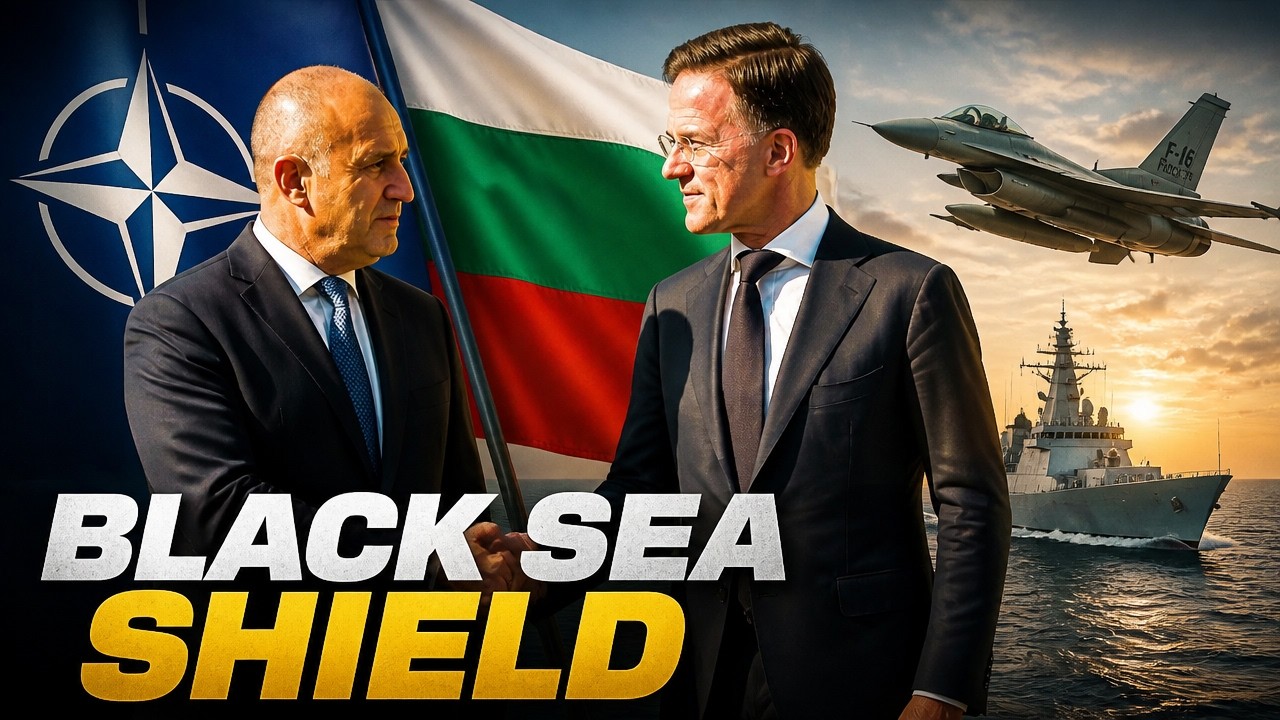
Bulgaria Rises as NATO’s Black Sea Shield Amidst Historic Defence Surge
In a significant declaration from Brussels, NATO Secretary General Mark Rutte has lauded Bulgaria as a pivotal ally, positioning the nation at the very heart of NATO’s strategy for its eastern flank. This recognition underscores Bulgaria’s critical and expanding role as the "Black Sea Shield," a testament to its commitment to collective defence and regional stability.
A Strategic Anchor in the Black Sea
During the recent meeting, Secretary General Rutte emphasized Bulgaria’s irreplaceable role in the Black Sea region, describing it as "key to the Alliance." This strategic importance is further cemented by Sofia’s continued hosting of a NATO forward land force, a clear demonstration of its dedication to strengthening the Alliance’s presence and readiness. Beyond its immediate borders, Bulgaria’s commitment to security extends through its valuable contribution to KFOR, the NATO-led peacekeeping force in Kosovo, highlighting its broader international security engagement.
Historic Defence Spending and Economic Dividend
The most compelling takeaway from the discussions in Brussels was Bulgaria’s trajectory in defence spending. Rutte announced that Bulgaria has not only successfully reached the 2% NATO benchmark – a crucial threshold for all member states – but is also ambitiously moving towards an impressive 5% of its GDP allocated to defence. Prime Minister Rumen Radev unequivocally confirmed the country’s steadfast commitment to gradually increasing its defence budget, signaling a historic defence surge. Rutte eloquently linked this substantial investment to a broader "defence dividend," asserting that robust defence spending is not merely an expenditure but a powerful catalyst. It has the potential to create jobs, support economic growth, and significantly bolster Bulgaria’s nascent yet growing defence industry.
Tackling European Defence Fragmentation
Prime Minister Radev, ever insightful, brought to the forefront one of Europe’s most enduring and difficult defence challenges: the persistent fragmentation of the European defence industry. Recalling earlier discussions with Rutte on this very issue, Radev stressed the imperative of leveraging both NATO and EU instruments to drastically improve defence readiness and industrial coordination across the continent. His potent message resonated deeply: modern deterrence relies not solely on advanced weaponry, but fundamentally on a synergistic combination of a robust industrial base, coherent strategy, seamless interoperability among allies, and, crucially, a highly motivated and well-trained military personnel.
Building Future Capabilities: A Checklist for Strength
Bulgaria’s commitment to enhancing its defence capabilities is evident through ongoing and planned procurements and initiatives. These include:
- Acquisition of advanced F-16 Block 70 fighter jets, significantly modernizing its air force.
- Introduction of state-of-the-art Stryker armoured vehicles to bolster ground forces.
- Development and deployment of new multi-role modular combat vessels, strengthening its naval presence in the Black Sea.
- Continued hosting and integration of the NATO forward land force in Bulgaria, ensuring collective defence readiness.
- Sustained KFOR contribution, extending its security responsibilities.
- Focused efforts on boosting Bulgarian defence industry production and integration into wider European supply chains.
- Prioritizing the recruitment, retention, and motivation of military personnel to ensure a strong and dedicated force.
- Active engagement in improving NATO and EU defence industry coordination to overcome fragmentation.
Bulgaria’s Enduring Commitment to NATO and Black Sea Security
As Bulgaria embarks on this historic defence surge, its strategic position as NATO’s Black Sea Shield becomes ever more pronounced. The country’s commitment to increasing defence spending, modernizing its military, and actively contributing to regional and international security initiatives, as praised by Mark Rutte and championed by Rumen Radev, solidifies its role as an indispensable ally on the Alliance’s eastern flank. This robust stance not only fortifies its own borders but significantly enhances the collective deterrence and defence posture of NATO, ensuring stability and security in a volatile region.
