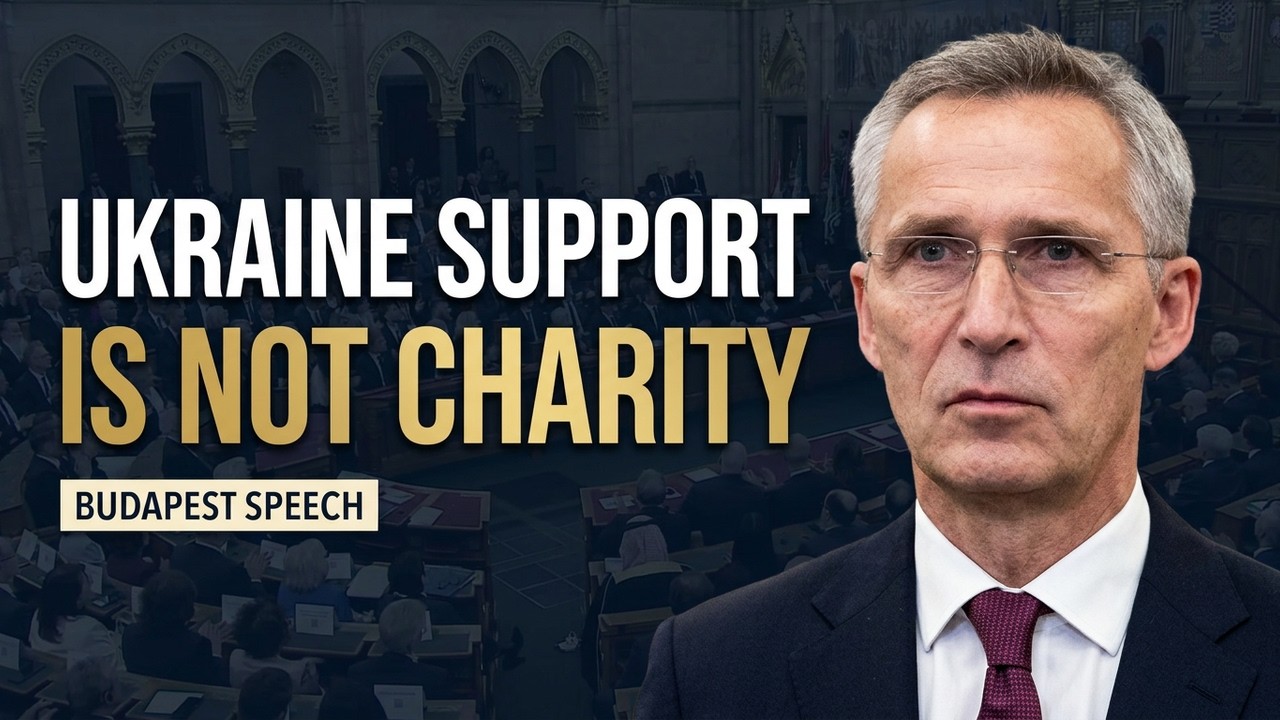
Speaking in Budapest on 23 October 2026, Jens Stoltenberg, former Norwegian prime minister and former NATO secretary general, connected the memory of Hungary’s 1956 revolution with Ukraine’s ongoing fight for sovereignty. During commemorative events marking the 70th anniversary of the Hungarian Revolution, Stoltenberg argued that support for Ukraine is a crucial investment in Europe’s own security, stating, “We cannot allow Russia to succeed.”
A Personal Connection to Hungarian History
Stoltenberg opened his address by recalling a personal connection to Hungary, including the period in the early 1990s when he and his wife lived in Budapest. The anniversary also held family significance, as he described growing up with his parents’ accounts of the 1956 uprising, the courage of its leaders, and the subsequent repression. In 1956, his parents volunteered at the Austrian-Hungarian border, assisting refugees. He recounted how some of those who fled became lasting family friends, including a 94-year-old former student who witnessed the events of 23 October 1956 and later settled in Norway, whose greetings Stoltenberg conveyed to the gathering.
Hungary’s Path to Euro-Atlantic Integration
The speech traced Hungary’s journey from decades of oppression to the fall of the Iron Curtain in 1989, followed by its membership in NATO and the European Union. Stoltenberg presented these institutions as the two pillars of a Euro-Atlantic security community founded on democracy, freedom, and the rule of law. He acknowledged Hungary’s contributions to NATO, highlighting its leadership of a multinational battlegroup, hosting an Alliance headquarters, and its participation in the peacekeeping mission in Kosovo, linking these efforts to shared security and stability in the Western Balkans.
Ukraine’s Struggle: An Investment in European Security
Stoltenberg used the 1956 anniversary to draw a parallel between Hungarians facing tanks then and Ukrainians facing Russian tanks today, warning that “Democracy can no longer be taken for granted.” He characterized Russia’s war against Ukraine as an attack on a sovereign democratic nation, asserting that Moscow seeks to reshape the European peace order through aggression. His central message was a call for unity within NATO, within Europe, and alongside Ukraine, emphasizing that Ukraine’s struggle extends beyond its own survival to encompass sovereignty, democracy, and self-determination. He underscored this by stating, “Our support for Ukraine is not charity. It is an investment in our own security.”
Honouring the Legacy of 1956
The address concluded by honouring the students, workers, fighters, refugees, and others who resisted oppression in 1956 and in the decades that followed. Stoltenberg presented their memory as a continuing responsibility to defend freedom and democracy, reinforcing the enduring relevance of their courage for Europe’s present security challenges.
What was the main message of Jens Stoltenberg’s speech in Budapest?
Jens Stoltenberg’s main message was that supporting Ukraine is a vital investment in Europe’s own security, drawing parallels between Hungary’s 1956 revolution and Ukraine’s current fight against Russian aggression.
When and where did Jens Stoltenberg deliver this speech?
Jens Stoltenberg delivered this commemorative speech in Budapest, Hungary, on 23 October 2026, marking the 70th anniversary of the Hungarian Revolution of 1956.
What personal connection does Stoltenberg have to Hungary?
Stoltenberg lived in Budapest with his wife in the early 1990s and grew up hearing his parents’ accounts of the 1956 Hungarian uprising. His parents volunteered to help Hungarian refugees at the border, and some became lasting family friends.