
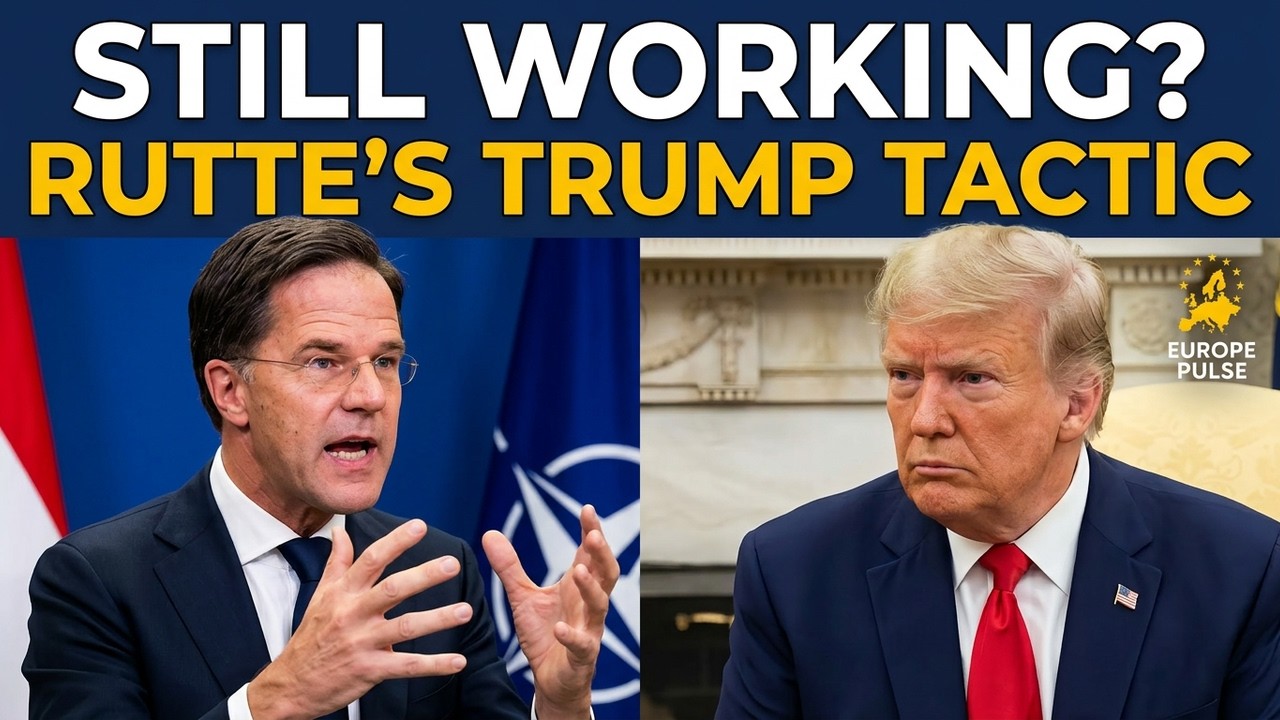
NATO Secretary General Mark Rutte recently met with Donald Trump in the Oval Office, employing a familiar diplomatic strategy of heavy praise to manage alliance tensions. The encounter highlighted both the personal effectiveness of Rutte’s approach and its limitations in fully neutralizing Trump’s criticism of NATO allies.
What Happened in the Oval Office
During his White House appearance, Mark Rutte presented Donald Trump as the key driver behind increased European and Canadian defence spending. Rutte referenced charts, including the “Trump trillion” and the “Trump 47 Effect,” stating that European and Canadian allies have collectively spent 1.2 trillion dollars extra on defence since Trump first took office in 2017. He also noted that these allies are set to spend almost 140 billion dollars extra on defence in 2025 and 2026.
Rutte also sought to temper Trump’s discontent regarding Europe’s involvement during the conflict with Iran. He highlighted that between 4,000 and 5,000 U.S. planes took off from European bases, asserting that European allies were broadly present. However, Trump pushed back, stating, “We were let down” and specifically named countries such as Italy, the UK, Germany, France, and Spain. Trump also claimed the U.S. “demolished” Iran in the first week and did not require allied assistance. On Ukraine, Trump commented that Volodymyr Zelensky is “doing pretty well” and “holding his own, at least.”
Does Rutte’s Trump Strategy Still Work?
The exchange raises a clear question about the continued efficacy of Rutte’s praise-heavy strategy on Trump. At a personal level, the tactic appears successful. Trump repeatedly referred to Rutte as a friend, a great leader, and a respected NATO chief, even suggesting the meeting might not have occurred with a different individual in Rutte’s position. Rutte himself stated, “This is the leader of the free world taking responsibility beyond the shores of the United States for the rest of the world,” and affirmed, “Your European allies have been there with you.”
However, the strategy does not entirely mitigate Trump’s broader criticisms of NATO allies. Trump continued to demand “loyalty,” expressed disappointment over allied support during the Iran conflict, and reiterated his call for NATO members to contribute 5 percent of their GDP to defence. While Rutte’s approach seems to facilitate access, reduce direct confrontation, and maintain Trump’s engagement, it does not prevent Trump from publicly pressuring Europe.
Key Points from the Meeting
- Donald Trump met NATO Secretary General Mark Rutte in the Oval Office ahead of the planned NATO summit in Ankara.
- Rutte commended Trump’s leadership on defence spending, NATO burden-sharing, and Iran.
- European and Canadian defence spending has increased by 1.2 trillion dollars since 2017, with an additional 140 billion dollars projected for 2025 and 2026.
- Rutte claimed 4,000 to 5,000 U.S. planes operated from European air bases during the Iran conflict.
- Trump praised Rutte personally but criticized several NATO allies, including Italy, the UK, Germany, France, and Spain, stating, “We were let down.”
- Trump reiterated his demand for “loyalty” and a 5 percent defence spending target from NATO members.
- On Ukraine, Trump noted that Volodymyr Zelensky is “holding his own, at least.”
Does Rutte’s praise strategy change Trump’s policy?
The source material does not indicate that Rutte’s tactic altered Trump’s policy positions, secured new NATO decisions, or ended Trump’s criticism of European allies. It primarily appears to manage personal interactions and maintain engagement.
What was Trump’s main criticism of NATO allies?
Donald Trump criticized several NATO allies for not offering sufficient help during the Iran conflict, stating, “We were let down.” He also continued to demand “loyalty” and for NATO members to pay 5 percent of their GDP on defence.
How much has European and Canadian defence spending increased?
Mark Rutte stated that European and Canadian allies have spent 1.2 trillion dollars extra on defence since Donald Trump first took office in 2017, with an additional 140 billion dollars expected in 2025 and 2026.
