
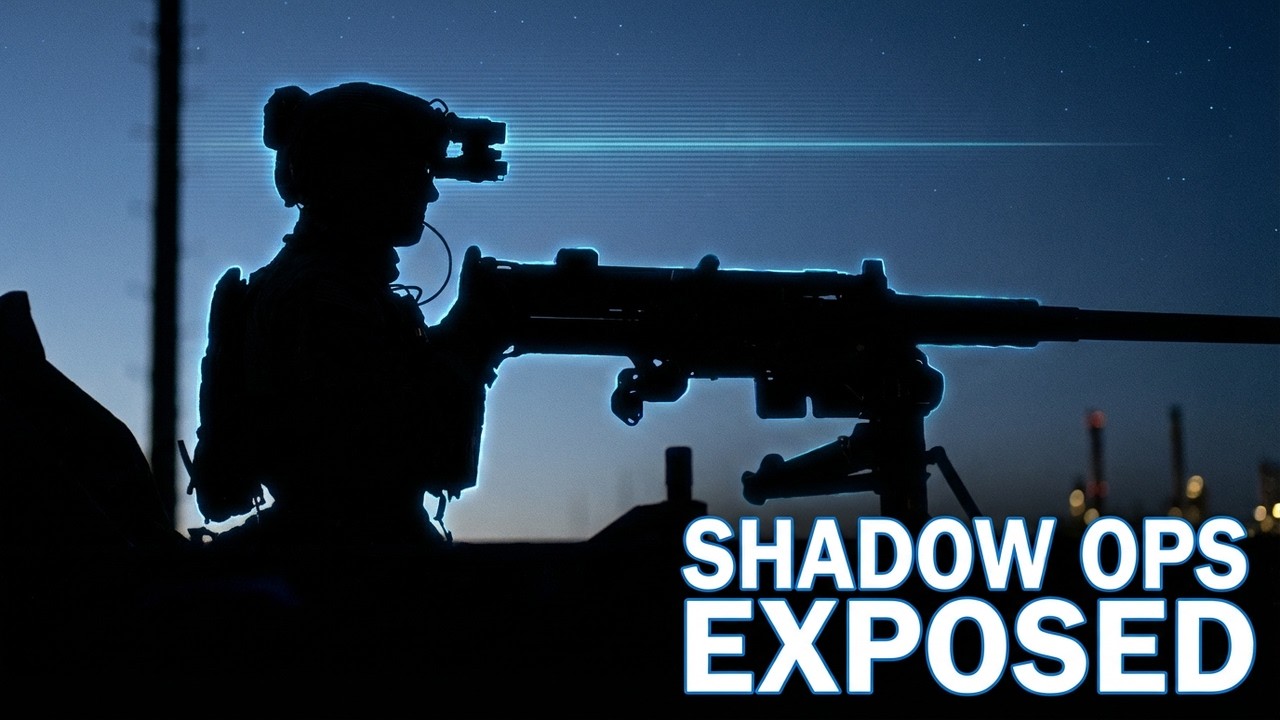
**NATO’s Shadow Warriors Unveiled: Inside the World of Elite Special Operations Forces**
**By EuropePulse Staff**
In the complex and often volatile landscape of global security, a select cadre of highly trained individuals operates in the shadows, executing missions deemed too sensitive, too dangerous, or too clandestine for conventional forces. These are NATO’s Special Operations Forces (SOF), often referred to as “shadow warriors,” and their world, typically shrouded in secrecy, is now offering a rare glimpse into what it truly takes to join their elite ranks.
EuropePulse.eu delves into the rigorous selection, advanced training, and critical deployments of these specialized units, revealing the unparalleled commitment and skill demanded of those who protect the Alliance from the gravest threats. From the unforgiving forests of Lithuania to multinational training hubs in Germany and high-stakes simulations in West Virginia, this exclusive insight, via nato.int, uncovers the making of NATO’s most formidable assets.
The Brutal Gauntlet: Forging the Elite
Becoming a NATO Special Operations operator is not merely about physical prowess; it is a profound test of mental fortitude, resilience, and an unwavering will to succeed against overwhelming odds. The journey begins with a selection process designed to filter out all but the most exceptional candidates.
Selection in Lithuania: Where 90% Fail
One of the most infamous proving grounds for aspiring SOF operators takes place in Lithuania, where a brutal selection process pushes candidates to their absolute limits. The statistics alone are staggering: up to 90% of hopefuls fail to complete the initial stages. This isn’t just about strength; it’s about endurance, problem-solving under extreme duress, and demonstrating the psychological resilience essential for high-stakes missions. Candidates face:
* **Extreme physical conditioning:** Marches over vast distances with heavy loads, sleep deprivation, and relentless physical challenges.
* **Intense psychological screening:** Designed to assess composure, leadership potential, and ethical decision-making under immense pressure.
* **Survival skills tests:** Forcing individuals to adapt and survive in hostile environments with minimal resources.
This crucible ensures that only those with exceptional mental toughness and an unshakeable resolve advance, forming the bedrock of NATO’s special operations capabilities.
Advanced Training: Mastering the Art of Unconventional Warfare
Once selected, the journey of an SOF operator continues with extensive, multinational training designed to hone a diverse array of specialized skills. These units must be proficient across a spectrum of unconventional warfare tactics, capable of operating effectively in any environment, against any adversary.
Multinational Training in Germany
Germany serves as a crucial hub for advanced multinational SOF training, where operators from across the Alliance converge to refine their craft. Here, the focus shifts from individual endurance to mastering complex operational skills and fostering seamless interoperability between different national units. Key areas of instruction include:
* **Close-Quarters Battle (CQB):** Precision techniques for engaging hostiles in confined spaces, demanding unparalleled accuracy and split-second decision-making.
* **Sniper Operations:** The art of long-range precision engagement, surveillance, and target acquisition, often critical for intelligence gathering and eliminating high-value targets.
* **Unconventional Warfare:** Training in guerrilla tactics, sabotage, intelligence gathering, and supporting resistance movements behind enemy lines. This includes everything from clandestine infiltration to establishing secure communication networks.
* **Medical and Evasion Skills:** Ensuring operators can provide battlefield first aid and evade capture if compromised.
This collaborative training environment ensures that when deployed, NATO SOF units can operate as a cohesive, formidable force, leveraging the unique strengths of each contributing nation.
Behind Enemy Lines: Simulating Real-World Threats
The theoretical knowledge and physical prowess acquired during selection and advanced training are continually put to the test in highly realistic exercises designed to mimic real-world scenarios. These simulations are vital for preparing SOF operators for the unpredictable nature of their actual missions.
Green Berets with Latvian and Polish Units in West Virginia
A prime example of this critical interoperability training unfolded in West Virginia, where the U.S. Army Special Forces – the legendary Green Berets – trained alongside Latvian and Polish special operations units. This high-intensity exercise was meticulously crafted to simulate operations behind enemy lines, focusing on the core competencies of unconventional warfare:
* **Infiltration of Hostile Territory:** Practicing covert entry techniques, evading detection, and establishing secure footholds in contested areas.
* **Building Resistance Networks:** Developing the skills to identify, assess, and support local populations willing to resist an occupying force, providing them with training, resources, and strategic guidance.
* **Simulated Operations:** Executing complex scenarios involving intelligence gathering, targeted strikes, and supporting indigenous forces, all while maintaining strict radio silence and operational security.
These exercises are invaluable, allowing diverse units to integrate their strategies, communication protocols, and tactical approaches, ensuring they are prepared for any contingency the Alliance might face.
Precision, Secrecy, and Uncompromising Success
NATO’s Special Operations Forces embody the Alliance’s commitment to maintaining peace and security through highly specialized means. They are the tip of the spear, designed for missions where failure is unequivocally not an option. Their operational philosophy is built upon three pillars: precision, speed, and secrecy.
These “shadow warriors” are deployed when the stakes are highest, where conventional military approaches might be too slow, too overt, or simply ineffective. Whether it’s counter-terrorism, hostage rescue, direct action, or special reconnaissance, NATO SOF units operate with an unparalleled level of professionalism and dedication. Their existence underscores the reality that modern warfare often requires an agile, adaptable, and highly specialized response, executed by individuals who push the boundaries of human capability.
As global security challenges evolve, the role of NATO’s Special Operations Forces becomes ever more critical. Their rigorous training and unwavering commitment ensure that the Alliance can always rely on its elite units to protect its interests and uphold its values, even in the darkest corners of the world.
