
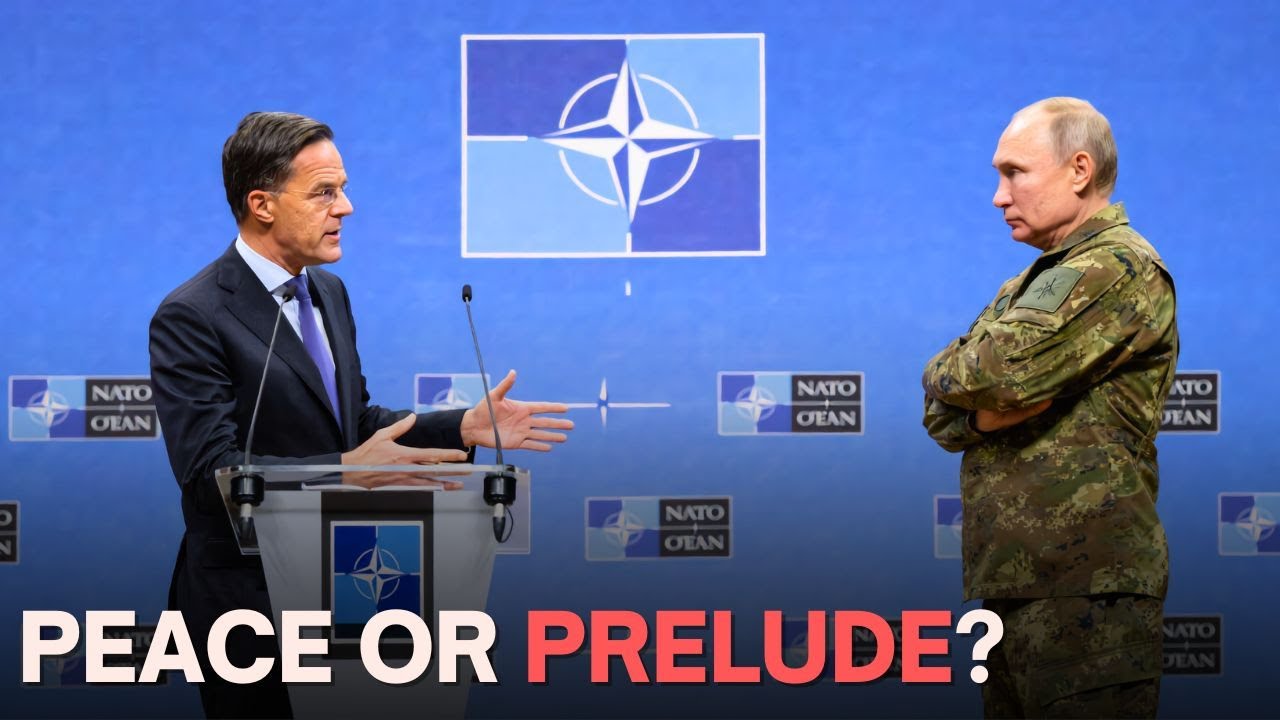
Why the NATO Brussels Meeting Matters
The NATO Foreign Ministers’ Meeting in Brussels on 3 December 2025 marked a decisive shift in the Alliance’s strategy. It was not a routine gathering. Ministers came with a clear message: Europe must prepare for a long period of confrontation with Russia, even as the United States tries to negotiate a peace deal.
Secretary General Mark Rutte warned that NATO faces “real and lasting dangers,” citing Russia’s continued missile strikes on Ukraine, violations of NATO airspace, and an uptick in hybrid attacks against Allied infrastructure.
The Brussels meeting sits between two key milestones:
-
the The Hague Summit, where Allies endorsed the 5% defence spending path,
-
and the upcoming Ankara Summit, where governments will be expected to show results.
The 5% Defence Pledge: Europe’s Biggest Security Shift in Decades
What the 5% Target Really Means
For years, NATO measured defence commitment through the 2% GDP benchmark. By 2035, the goal is 5% of GDP, including at least 3.5% for core defence capabilities such as air defence, ammunition production, troop readiness and critical infrastructure.
Frontline states are driving the momentum:
-
Lithuania: 4% of GDP in 2024, increasing to 5.4% in 2025
-
Latvia: strong emphasis on “hardcore defence capabilities”
-
Sweden: planning to reach 3.5% by 2030
-
Finland: calls for rapid strengthening of European deterrence
The Nordic countries highlighted that together—despite having fewer than 30 million people—they provide one-third of NATO’s total military support to Ukraine this year. Their message: if small states can do this, larger economies must do more.
PERL: How Europe Pays for U.S. Weapons for Ukraine
One of the most concrete outcomes in Brussels was the expansion of PERL – the Prioritised Ukraine Requirement List.
How PERL Works
-
The United States delivers the weapons (Patriots, air defence missiles, ammunition).
-
European Allies and Canada finance the deliveries.
Secretary General Rutte confirmed that Allies have already committed over $4 billion, with the programme on track to reach $5 billion by year’s end, and more expected in 2026.
A New $500 Million Package
Germany, Norway and Poland jointly announced a $500 million contribution through PERL. Poland explicitly linked the pledge to a recent sabotage attempt on its railway network:
“A bomb was designed to derail a Polish train… this is why we are joining the $500 million package,”
said Polish Foreign Minister Radosław Sikorski.
The political message is clear: the more Russia escalates hybrid attacks, the more Europe will arm Ukraine.
Hybrid Attacks Inside NATO: From Balloons to Bombs
Ministers repeatedly stressed that Russia’s hybrid operations are becoming more frequent and more dangerous. Recent incidents include:
-
a bomb planted to derail a Polish passenger train
-
meteorological balloons disrupting Baltic civil aviation
-
GPS jamming and spoofing across the region
-
cyber attacks and arson targeting Allied infrastructure
-
Russian drones violating Moldovan airspace
Lithuania described the situation bluntly: NATO is already under hybrid attack.
Latvia noted that Allies possess offensive cyber capabilities and warned that they may need to be used if Russian operations intensify.
Peace Talks: U.S. Optimism, European Skepticism
A Process Led Almost Entirely by Washington
One of the most politically sensitive topics in Brussels was the ongoing peace process led by the United States. President Trump and Secretary of State Marco Rubio have been holding talks with Moscow in Geneva, Miami and most recently in Moscow.
Mark Rutte stressed that NATO will not comment on the details:
“Only the American president has been able to break the deadlock…
The last thing I want to do is make things more difficult.”
European Ministers: Russia Shows No Willingness to Compromise
Despite U.S. efforts, Europe’s frontline states remain unconvinced:
-
Sweden: “I see no sign Russia wants peace.”
-
Finland: “A ceasefire on energy infrastructure would be the first real confidence-building measure.”
-
Lithuania: “Russia uses so-called peace talks to weaken the U.S. and split NATO.”
The concern is that Moscow wants a pause, not peace—and that any agreement rewarding territorial gains would undermine international law.
Frozen Russian Assets: A Potential Game Changer
Another major issue was the EU proposal to use the profits generated by frozen Russian state assets—mostly held in Belgium—to support Ukraine.
Belgium wants financial guarantees from other member states in case of legal disputes or losses.
Lithuania suggested an alternative long-term model if the EU plan fails:
-
0.25% of GDP annually for 10 years, dedicated to Ukraine’s defence
This alone could provide Ukraine with enough funding for long-term security.
What the Brussels Meeting Means for Europe
1. NATO is preparing for a long confrontation with Russia
Hybrid attacks and missile strikes suggest the conflict will remain unstable, even if talks continue.
2. Defence budgets across Europe will rise sharply
The 5% path implies major structural shifts in national spending priorities.
3. The U.S. leads diplomacy, Europe pays for deterrence
PERL reflects a new division of labour within NATO.
4. Support for Ukraine is becoming long-term and institutional
Whether via frozen assets or national budgets, Ukraine will require stable funding for years.
Conclusion: Peace or Preparation for the Next Stage?
The Brussels meeting leaves Europe with a difficult question:
Will the 5% defence plan and the U.S.-led peace talks bring a lasting settlement closer —
or are NATO countries preparing for the next, more dangerous phase of the conflict?
