
Russia’s war against Ukraine has significantly accelerated the pace of battlefield innovation, prompting NATO to intensify its efforts to integrate emerging technologies into military capabilities. Innovation cycles that once spanned years are now condensing into months, a shift highlighted by Sweden’s Defence Minister Pål Jonson, who noted that processes previously taking five or six years can now occur in five or six months in Ukraine.
This rapid evolution is compelling Allied governments to rethink how they identify, test, procure, and deliver new defence capabilities. NATO is actively working to accelerate defence innovation across the Alliance, focusing on turning advanced technology into practical military assets before the security landscape further transforms.
NATO’s Innovation Drive
Central to NATO’s strategy are initiatives like the NATO Innovation Fund and DIANA, the Defence Innovation Accelerator for the North Atlantic. The NATO Innovation Fund has been established by 24 Allies to support the development of cutting-edge defence technologies. DIANA, meanwhile, is designed to speed up the adoption of innovative technologies into the Alliance, acting as a crucial link between emerging tech and defence end-users.
Emma Rose Burton, a NATO DIANA representative, described the accelerator’s role: “We are the connective tissue between emerging technology and defence end-users and senior defence decision-makers.” This collaborative approach aims to ensure that the Alliance maintains its technological edge in a complex security environment increasingly shaped by artificial intelligence, autonomous systems, quantum computing, and new forms of warfare.
Showcasing New Technologies
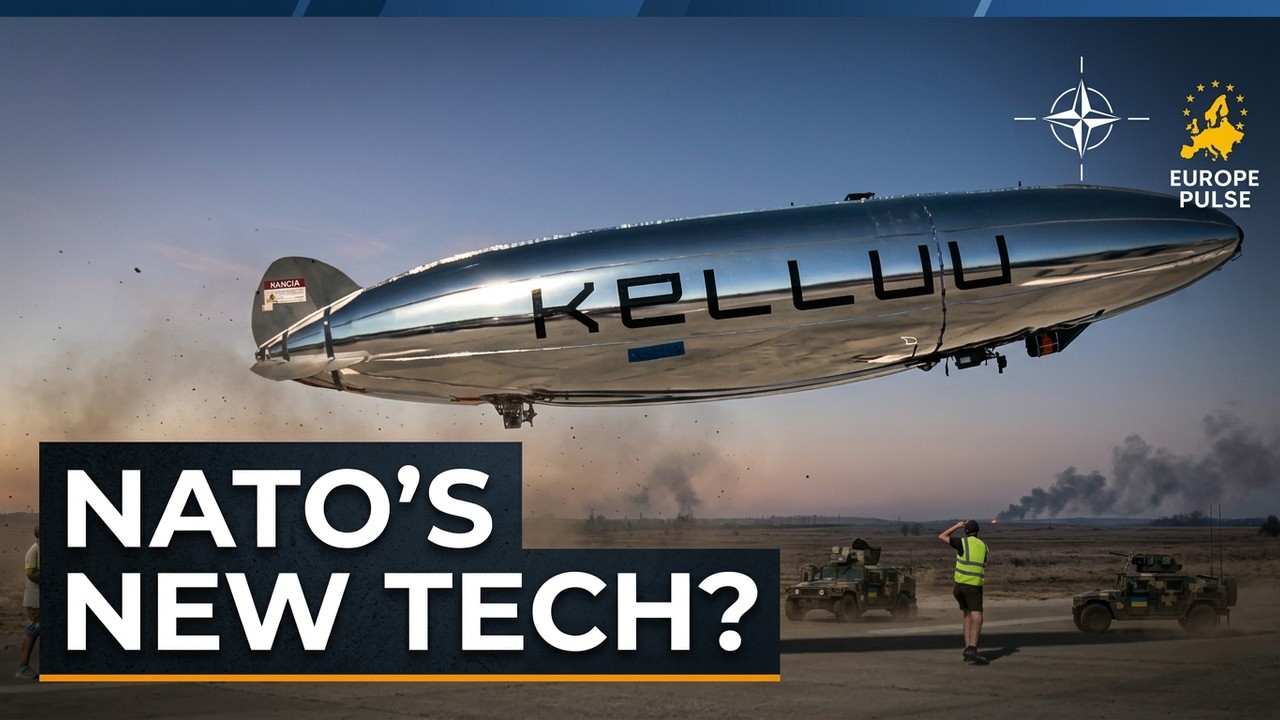
The push for innovation is evident in various technologies being trialled or used in military environments. Examples include Kelluu, a Finnish company utilizing airships for persistent intelligence, surveillance, and reconnaissance. Lobster Robotics’ Scout 3 underwater drone is another featured system, aimed at seabed mapping, mine identification, and the protection of critical underwater infrastructure. Bas van Vliet, Co-founder of Lobster Robotics, stated: “With our underwater drones, we want to make it super easy for NATO countries to protect critical underwater infrastructure, to identify mines and to make the underwater space a lot safer.”
Canada is also leveraging DIANA’s Rapid Adoption Service to partner with Scottish innovator HonuWorx on advanced subsea robotics, further illustrating the Alliance’s commitment to integrating diverse technological solutions.
Strategic Commitments and Future Focus
At the 2025 NATO Summit in The Hague, Allies agreed to increase defence spending, with a specific focus on strengthening the defence industry, scaling up production, and accelerating innovation. Tarja Jaakkola, NATO Assistant Secretary General for Defence Industry, Innovation and Armaments, emphasized this broader perspective: “Defence is not just a question about the troops, but it’s also a question of innovative solutions.”
NATO Secretary General Mark Rutte underscored the dual need for both quality and speed: “We need quality and quantity. We need to innovate and we need to act fast.” This collective commitment reflects the urgency felt across the Alliance as it faces what Pål Jonson described as “one of the worst moments in European security since the end of the Second World War.”
FAQ
Why is NATO accelerating defence innovation?
NATO is accelerating defence innovation because Russia’s war against Ukraine has shown a significant increase in the pace of battlefield innovation, with technology cycles moving from years to months. This requires NATO to quickly adapt and integrate new capabilities to maintain its technological edge.
What are DIANA and the NATO Innovation Fund?
DIANA (Defence Innovation Accelerator for the North Atlantic) is designed to speed up the adoption of innovative technologies into the NATO Alliance. The NATO Innovation Fund, established by 24 Allies, supports the development of cutting-edge defence technologies.
What was agreed at the 2025 NATO Summit regarding defence?
At the 2025 NATO Summit in The Hague, Allies agreed to increase defence spending, with a focus on strengthening the defence industry, scaling up production, and accelerating innovation.
