
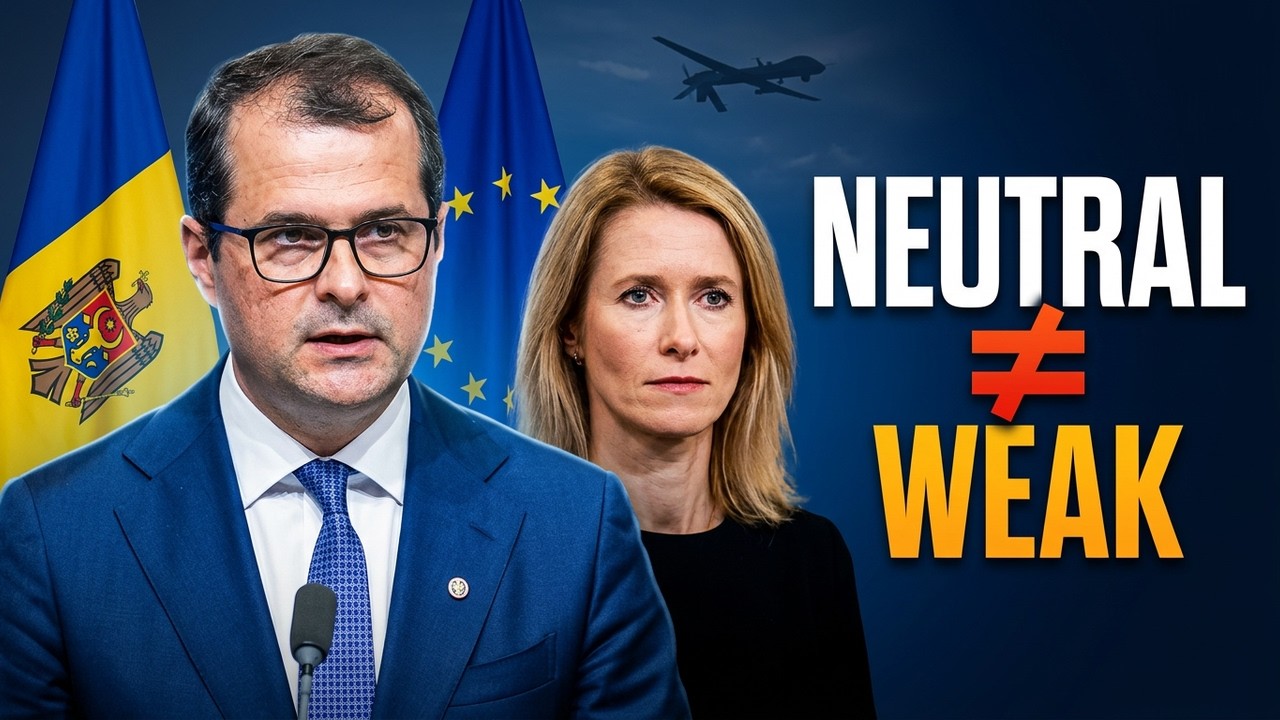
Moldova is facing increasing pressure on its security as Russian drone and missile incursions into its airspace intensify, prompting the country to assert that its neutrality “doesn’t mean weak.” This stance was articulated by Moldovan Prime Minister Vasile Tofan at the 10th EU–Moldova Association Council in Brussels, where he emphasized the urgent need for stronger air surveillance and air-defence capabilities.
Moldova’s Stance on Neutrality and Security
Prime Minister Tofan delivered a strong message regarding Moldova’s position amid regional instability. “We are a neutral country. We are committed to remain neutral, but that doesn’t mean we have to be a weak country that is underinvesting in its defense,” Tofan stated. EU foreign policy chief Kaja Kallas echoed concerns, describing repeated Russian violations of Moldovan airspace as “completely unacceptable” and warning that the Kremlin’s actions aim to create fear and paralyse decision-making across Europe.
The Moldovan government highlighted that the number of drones entering its sovereign territory is intensifying, making enhanced air defence a critical priority.
Path to EU Membership
The Association Council also focused on Moldova’s accelerated path towards the European Union. The Moldovan government aims to complete the technical work required for accession negotiations by early 2028 and prepare the country for EU membership by 2030. Tofan stressed that Moldova seeks a predictable, merit-based process, not lower standards or shortcuts.
European Commissioner for Enlargement Marta Kos described Moldova as one of four frontrunner countries in the enlargement process, noting that further negotiating clusters could be opened as reforms continue. Kos also acknowledged that both Moldova and Ukraine are delivering reforms under extremely difficult circumstances, with Ukraine simultaneously fighting for survival and pursuing EU accession.
Energy Security and EU Support
Energy security remains a significant challenge for Moldova. Prime Minister Tofan outlined government efforts to diversify gas supplies towards friendly countries, including American energy via the Vertical Corridor, European suppliers like Romania, and closer energy ties with Azerbaijan. The EU affirmed its support for Moldova, which includes assistance for defence modernisation, economic integration, and energy resilience.
Sanctions Against Russia
Kaja Kallas also provided an update on sanctions against Russia, confirming that work is under way on approximately 1,600 additional listings. She noted that previously agreed listings would now remain in place for three years, removing the need for renewal every six months.
What is Moldova’s stance on its neutrality?
Moldova maintains its commitment to neutrality but asserts that this does not imply weakness or a lack of investment in its defence capabilities, especially given escalating security pressures.
What are Moldova’s goals for EU membership?
The Moldovan government aims to complete the technical work for EU accession negotiations by early 2028 and prepare the country for full EU membership by 2030, seeking a merit-based process.
How is Moldova addressing energy security?
Moldova is actively working to diversify its gas supplies by seeking energy from friendly countries, including American energy via the Vertical Corridor, European suppliers like Romania, and enhanced ties with Azerbaijan.
