
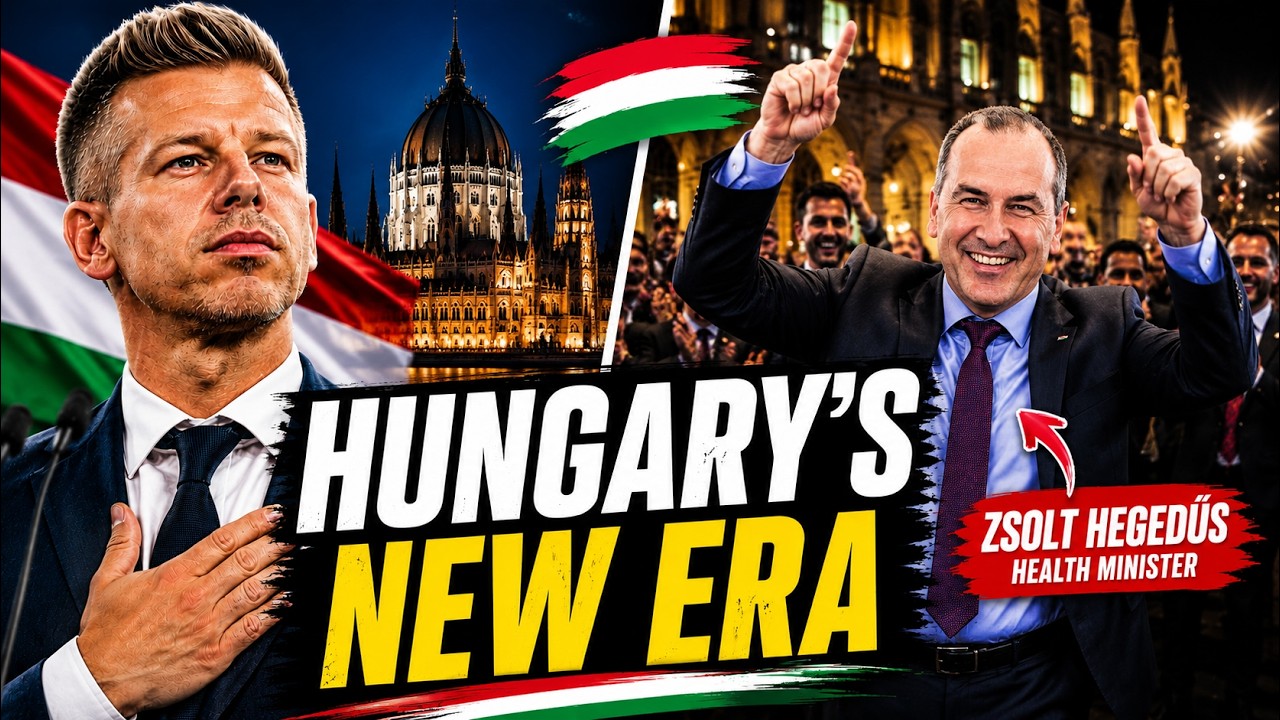
Hungary’s Political Earthquake: Magyar Sworn In, Health Minister Dances into a New Era
BUDAPEST – In a moment that has sent ripples across Europe, Hungary has witnessed one of its most dramatic political shifts in modern history. Péter Magyar, leader of the burgeoning Tisza Party, was sworn in as Hungary’s new Prime Minister, signaling a profound departure from years of entrenched political division and accusations of democratic backsliding. But it wasn’t just Magyar’s powerful rhetoric that captivated the continent; it was the surreal image of newly appointed Health Minister Zsolt Hegedűs joyfully dancing outside the iconic Hungarian Parliament Building that became an instant symbol of a nation’s hopeful new beginning.
Magyar’s ascension to the premiership, following a rapid political rise, has been nothing short of a political earthquake. In his inaugural address, delivered with fervent conviction before an expectant nation, Magyar laid out a vision that he described as nothing less than a “regime change.” This transformation, he asserted, was not engineered by elites or fueled by propaganda, but by the will of ordinary Hungarians reclaiming their country and its democratic institutions. His speech resonated with promises of a future where Parliament, long perceived by many as a symbol of exclusion, would once again become “the house of Hungary” – a place of genuine representation and dialogue.
A New Dawn for Hungarian Politics?
Magyar’s address was a masterclass in unifying rhetoric, immediately setting a tone starkly different from the political landscape dominated by Viktor Orbán for over a decade. He pledged to rebuild Hungary as a “free, democratic, humane home,” echoing a deep yearning among citizens for a return to core democratic values. Perhaps one of the most striking declarations was his outright rejection of political tribalism: “There is no right, no left, only Hungary,” a powerful appeal for national unity over partisan divides. This sentiment aims to bridge the deep ideological chasms that have characterized Hungarian society, inviting a collective effort towards national renewal.
Furthermore, the new Prime Minister underscored a commitment to empowering local communities, fostering dialogue, and significantly enhancing civic participation. His message extended even to political opponents, urging a spirit of reconciliation rather than retribution: “Do not humiliate them — this country belongs to everyone.” This inclusive approach marks a significant ideological pivot, attempting to heal wounds and build consensus in a nation often portrayed as deeply polarized. Magyar’s vision paints a picture of a Hungary that is not only democratic but also compassionate, aiming to restore trust in institutions and among its people.
A Symbol of Change: Health Minister Hegedűs Dances
As the echoes of Magyar’s transformative speech faded, the scene outside Parliament erupted in joyous celebration. Amidst the jubilant crowds and flashing cameras, newly appointed Health Minister Zsolt Hegedűs provided one of the most unusual and memorable political moments Europe has witnessed in years. Surrounded by cheering supporters and fellow MPs, Hegedűs was seen dancing with unbridled enthusiasm – a spontaneous and utterly disarming display of optimism and relief. This viral moment quickly became a potent symbol, conveying a palpable sense of liberation and the sheer joy of a perceived fresh start. It was a visual declaration that a new era had indeed begun, breaking the mold of traditional, rigid political decorum with an infectious exuberance.
Beyond the Headlines: What This Means for Europe
The events in Budapest signify more than just a change of leadership; they represent a potential turning point for Central European politics. After years of international scrutiny over its democratic health, Hungary is now charting a new course under Magyar’s leadership, promising greater transparency, freedom, and a renewed commitment to European values. This dramatic shift could reconfigure regional alliances and influence the broader European Union discourse on democracy and governance. The challenges ahead are formidable, but the energy and hope emanating from Budapest suggest a nation ready to embrace its future as a “free, democratic, humane home” within Europe.
