
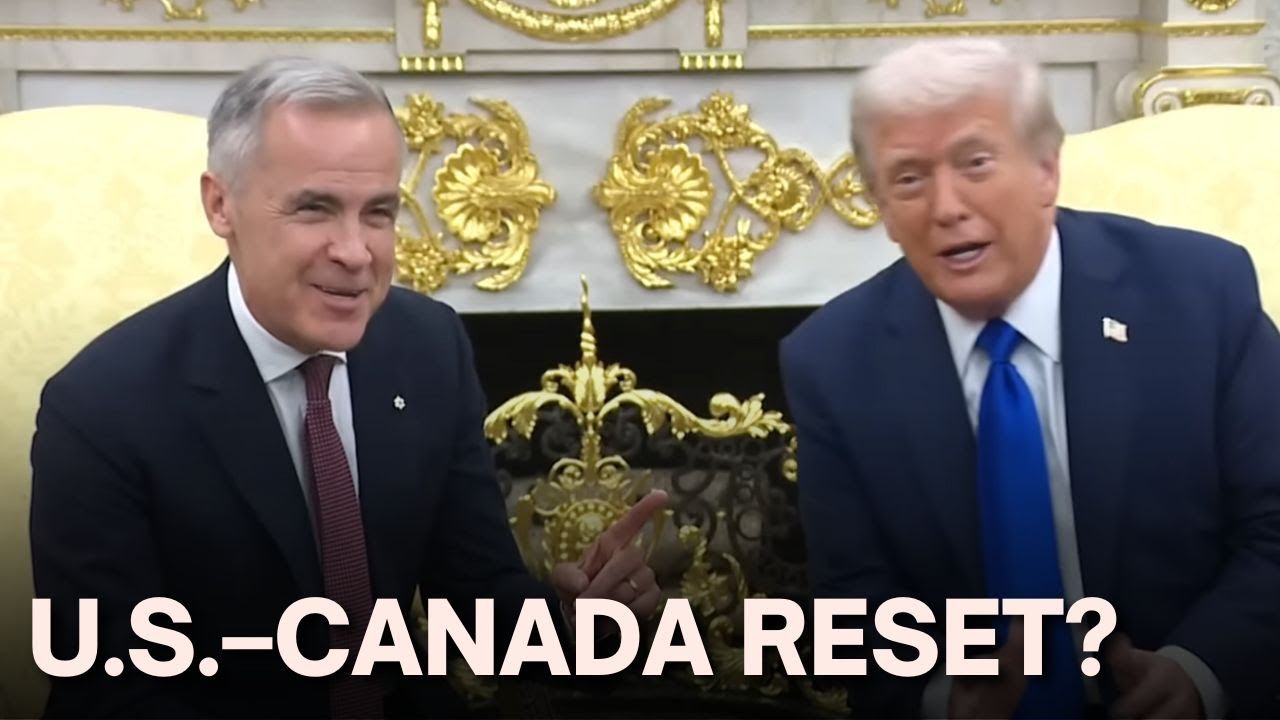
Trump–Carney Press Conference Signals Possible Thaw: Trade Talks, Tariffs, and Joint Defense on the Table
At the White House, U.S. President Donald Trump and Canadian Prime Minister Mark Carney presented a warmer tone than in previous encounters, suggesting U.S.–Canada relations could improve. Trump said both sides would discuss trade and tariffs, including steel and aluminum, and hinted that compromises have already been made “even on steel.”
Pressed on whether he would lower or drop tariffs on Canadian sectors, Trump said talks with Carney would address those issues “a little bit later on.” Trump characterized U.S.–Canada trade as a “natural conflict” driven by competing ambitions in autos and steel, while also stressing mutual affection between the countries. Asked why no agreement has been reached yet, he called the Canada–U.S. file “more complicated than any other”, citing the two economies’ proximity and overlapping industrial goals.
Carney highlighted Canada as the second-largest U.S. trading partner and largest foreign investor in the United States, claiming $500 billion invested over five years and projecting far higher flows if a new deal is struck.
Both leaders acknowledged competition in autos, with Trump noting U.S. consumers prefer cars built in America, and Carney saying the two sides must craft “an agreement that works.” On USMCA, Trump said it could be renegotiated or replaced with separate deals, pledging to pursue whatever is “best for this country, and also very much with Canada in mind.” Asked about a minimum tariff in future deals, Trump replied the two countries already charge tariffs, pointing to past high Canadian duties on U.S. agriculture and saying reductions are part of ongoing talks. On dairy and supply management, Trump said “a deal wouldn’t include dairy… it’s going to include everything,” signaling an expansive approach that would put Canadian dairy on the table.
In response to a question about Canadians traveling less to the U.S., Trump said tensions would be “worked out,” insisting there remains “great love” between the countries.
Carney echoed a pragmatic stance: there are areas where Canada and the U.S. compete, but “more areas where we are stronger together.”
On border security and fentanyl, Trump said cooperation with Canada and Mexico had “made it a lot better,” while Carney added “any amount is too much” and vowed continued efforts to reduce flows. Trump claimed U.S. border policies also benefit Canada, asserting fewer illegal crossings and drug routes. In a notable defense signal, Trump announced both countries would “work very closely” on a joint protective “Golden Dome” system, calling the technology “unbelievable” and “very important” for North American security. Asked whether Canada would leave empty-handed, Trump said Ottawa would “walk away very happy,” without disclosing specifics. On the broader trade tone, Trump praised Carney as a “world-class leader” and “tough negotiator,” while reiterating his own aim to be “a great man, too.”
Carney underscored a pro-deal outlook, saying both sides would secure the “right deal for America” and for Canada. On China, both leaders agreed the key is to compete effectively, with Carney saying Canada will do better together with the U.S. Throughout, both projected closer alignment than in prior meetings, framing today’s talks as the start of practical steps on tariffs, autos, agriculture, and security.
The overall message: difficult files remain, but tone and intent point toward de-escalation and constructive bargaining.
——————————————————
*Subscribe to Europe Pulse*
Stay updated with the latest news from Europe.
#EuropePulse #BreakingNews #EU #WorldNews #Politics #TrendingNow #NewsUpdate #Analysis #Ukraine #Russia #USA #UK #EuropeanUnion #NATO #WorldEvents #CurrentAffairs #EUnews #TopStories #InternationalNews #Brussels #Leaders #ViralNews #Headlines