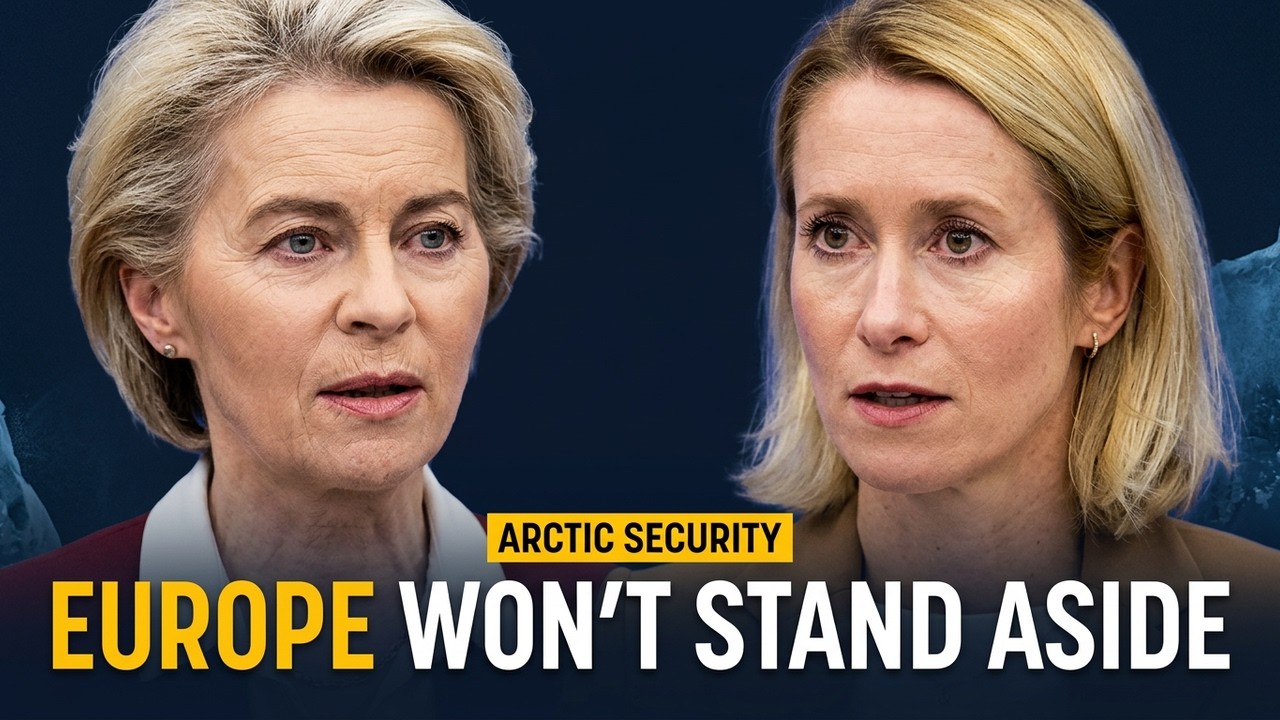
European leaders Kaja Kallas and Ursula von der Leyen have outlined Europe’s comprehensive strategy for the Arctic, asserting the continent “will not be a bystander” in the region. With the Arctic becoming a “front line of global power competition,” as Kallas stated, the European Union is intensifying its focus on security, resources, and climate challenges in its northern neighbourhood.
Europe’s Strategic Arctic Posture
European Commission President Ursula von der Leyen underscored the direct relevance of the Arctic to the European Union, linking Russia’s military footprint and hybrid strategies to Europe’s overall security. She highlighted the region’s importance for critical raw materials and emerging trade routes, while also emphasizing the protection of indigenous communities and climate, stating, “The Arctic belongs to the people of the Arctic.” Von der Leyen added, “We have to act and change our strategic posture,” noting that the Arctic is warming nearly four times faster than the global average.
The EU is also seeking to strengthen partnerships with Arctic allies, including Canada, to address shared concerns and foster cooperation.
Addressing Competition and Infrastructure
EU High Representative Kaja Kallas addressed the escalating power competition, specifically citing Russia’s military expansion and China’s growing ambitions in the Arctic. She called for scrutiny of Chinese investments in ports, minerals, and critical infrastructure. Kallas emphasized the need to protect undersea infrastructure and proposed exploring joint procurement and pooling options to expand Europe’s icebreaker capacity, stating, “Icebreakers are the measure of power.”
Kallas also outlined plans to improve military mobility through Arctic ports, airports, and transport corridors. A significant €200 million investment in Greenland is planned, covering renewable energy, raw materials, connectivity, housing, and infrastructure, including a secure submarine cable linking Greenland to Europe.
Climate Commitments and Energy Security
The discussion also touched upon the delicate balance between climate commitments and energy security. When questioned about Arctic fossil fuels, Commissioner for International Partnerships Jozef Síkela reiterated the EU’s climate position. While affirming the EU’s dedication to its climate goals, Síkela acknowledged and respected Norway’s decision to explore opportunities for new drilling in the region.
What are the key elements of the EU’s Arctic Security strategy?
The EU’s Arctic Security strategy involves addressing global power competition, enhancing military mobility and icebreaker capacity, scrutinizing foreign investments, and investing in Greenland’s infrastructure, while also upholding climate commitments and protecting indigenous rights.
How is the EU planning to enhance its presence in the Arctic?
The EU plans to enhance its presence by exploring options for expanding icebreaker capacity, improving military mobility, scrutinizing foreign investments, and investing €200 million in Greenland for infrastructure and connectivity, including a secure submarine cable.
What is the EU’s stance on Arctic fossil fuels?
The EU reiterates its commitment to climate goals while respecting the sovereign decisions of Arctic partners, such as Norway’s exploration of new drilling opportunities for fossil fuels.