
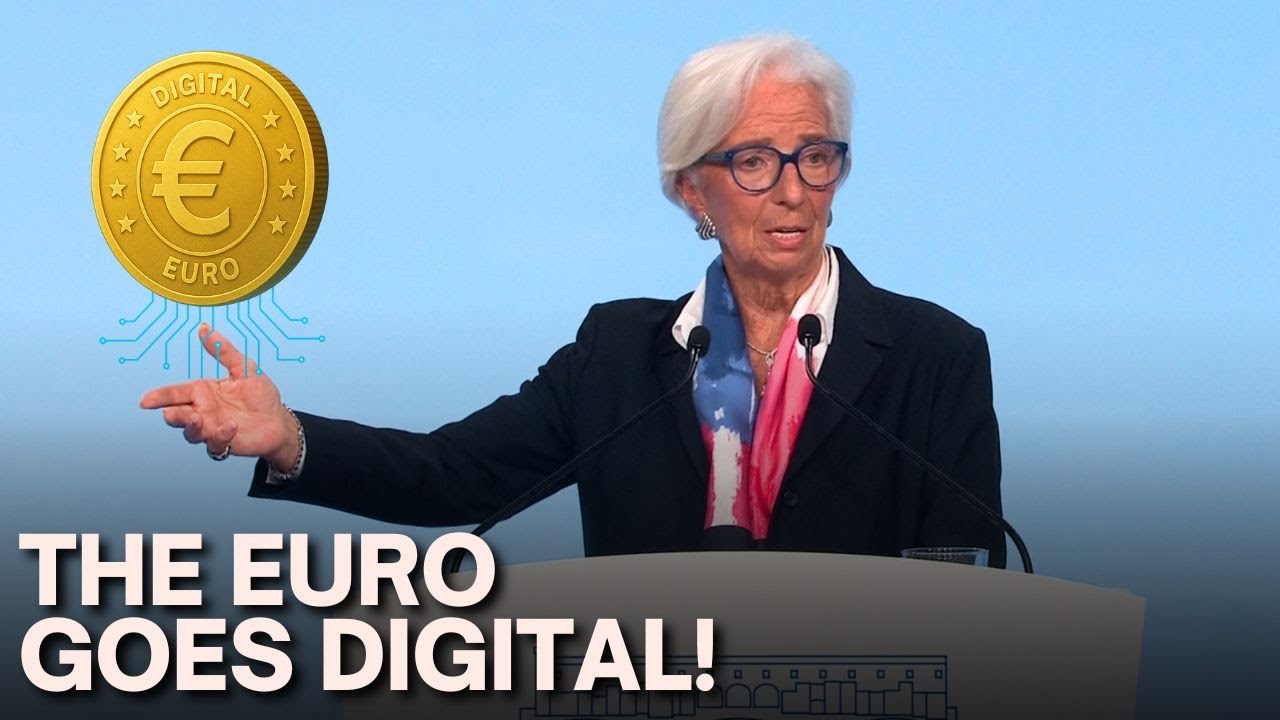
ECB Advances to Next Phase of Digital Euro — Pilot Launch Expected by 2027, Full Rollout by 2029
#euro #digitaleuro #ecb
The European Central Bank has officially entered the next phase of its digital euro project, setting the stage for the possible first issuance of a European central bank digital currency (CBDC) by 2029. The ECB Governing Council confirmed the move after the successful completion of the preparation phase, launched in November 2023, which built the foundations for a digital form of the euro designed to coexist with cash.
ECB President Christine Lagarde emphasized that the digital euro will serve as “the digital form of a banknote,” preserving Europeans’ freedom of choice, privacy, and monetary sovereignty. She reiterated that “money is a public good” and insisted that central bank money must remain “an active part of the system that people can actually trust,” even as payment habits shift toward digital methods.
The Governing Council’s decision follows a call from EU leaders at the October 2025 Euro Summit to accelerate progress. The ECB stated that if EU legislation is adopted in 2026, pilot exercises could begin in 2027, with full readiness for potential issuance by 2029.
Executive Board member Piero Cipollone, chair of the High-Level Task Force on the digital euro, said the initiative will “future-proof Europe’s monetary system,” enhance competition in payments, and lower costs for merchants. The ECB estimates total development costs at around €1.3 billion up to 2029, with annual operational costs projected at €320 million thereafter — all to be borne by the Eurosystem, similar to banknote production.
The Bank of Italy Governor Fabio Panetta defended the project’s cost-benefit balance, arguing that adoption expenses for banks — roughly €6 billion over four years across 2,000 banks — represent “just 3% of annual IT costs.” He stressed that competition in payments would prevent banks from passing these costs to consumers and that the system would ultimately strengthen European payment sovereignty.
Lagarde also addressed comparisons with the United States, noting that while Washington limits central bank digital currencies, Europe is embracing public digital money. She underlined that the ECB’s goal is innovation, not restriction, highlighting that the digital euro will coexist with cash and private payment systems while ensuring financial stability and regulatory oversight.
The ECB will now focus on technical readiness, market engagement, and legislative support — working with payment providers, merchants, and consumers to test prototypes and refine the system. The Eurosystem also reaffirmed its commitment to transparency and close cooperation with stakeholders as it prepares to make Europe’s money “fit for the digital age.”
——————————————————
*Subscribe to Europe Pulse*
Stay updated with the latest news from Europe.
#EuropePulse #BreakingNews #EU #WorldNews #Politics #TrendingNow #NewsUpdate #Analysis #Ukraine #Russia #USA #UK #EuropeanUnion #NATO #WorldEvents #CurrentAffairs #EUnews #TopStories #InternationalNews #Brussels #Leaders #ViralNews #Headlines