
European Leaders Reject Trump’s Greenland Pressure as Tariff Threats Raise Transatlantic Tensions
European and NATO leaders are pushing back against pressure from former US President Donald Trump, who has warned of imposing new tariffs on European countries unless the issue of Greenland’s future is addressed by early February.
The comments come amid renewed US claims that greater American influence over Greenland is necessary for Arctic security, with Trump linking the issue directly to trade measures against Europe.
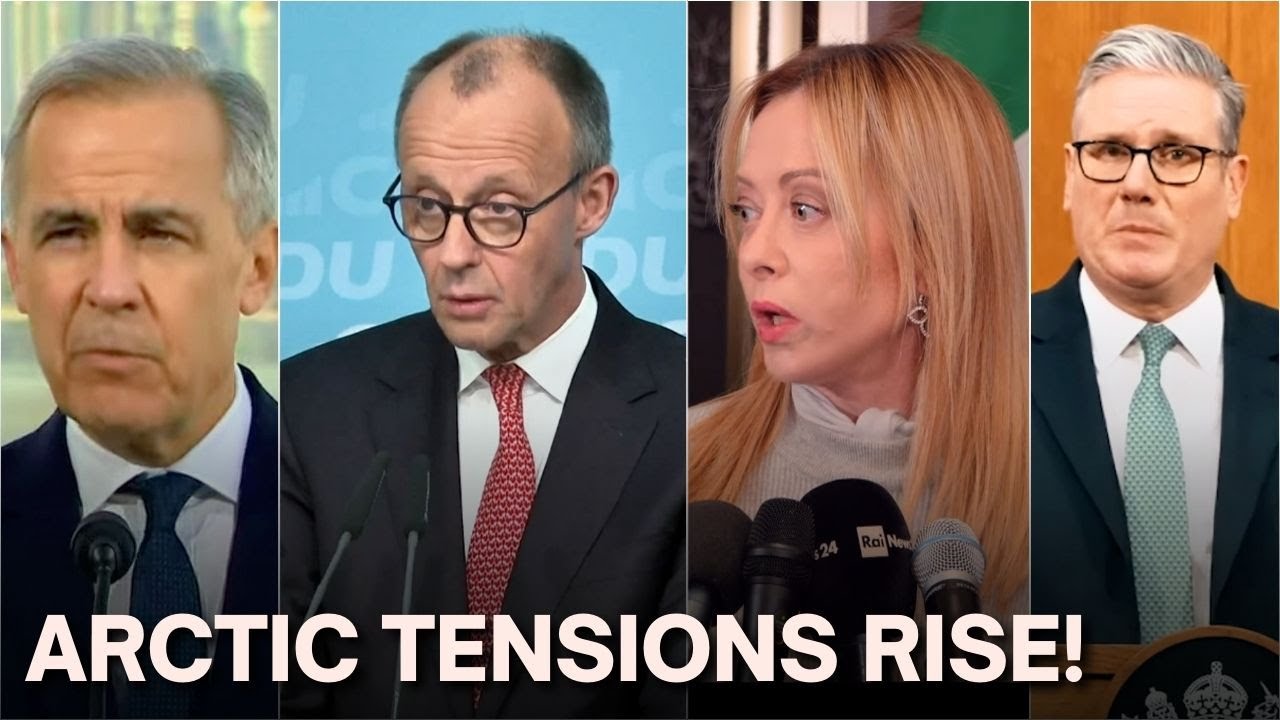
German Chancellor Friedrich Merz said the geopolitical landscape is shifting rapidly, stressing that Europe recognises the strategic importance of the High North. He confirmed that Germany recently completed a reconnaissance mission in Greenland, coordinated with Denmark, to assess possible security gaps.
Merz underlined that any European engagement in Greenland serves shared transatlantic and NATO interests, while firmly supporting Danish sovereignty and Greenland’s population. He warned that tariff threats would weaken, not strengthen, transatlantic relations, adding that tariffs ultimately hurt consumers and economies on both sides of the Atlantic.
British Prime Minister Keir Starmer echoed those concerns, describing tariffs against allies as “completely wrong.” Starmer said the security of Greenland will become even more critical as climate change opens Arctic sea routes and intensifies strategic competition. However, he stressed that decisions on Greenland’s future rest solely with Greenlanders and the Kingdom of Denmark, calling respect for sovereignty the foundation of lasting alliances.
Canadian Prime Minister Mark Carney warned of escalation and reaffirmed Canada’s unconditional support for territorial integrity, comparing the Greenland situation to other global sovereignty disputes, including Ukraine. He said Arctic security must be addressed through NATO cooperation, not unilateral pressure, and confirmed ongoing talks with European and Nordic partners.
Italian Prime Minister Giorgia Meloni said imposing tariffs on countries contributing to Greenland’s security would be a mistake. While acknowledging US concerns about hostile influence in the Arctic, Meloni insisted NATO is the correct framework to strengthen deterrence and avoid escalation. She confirmed direct talks with Trump and NATO leadership aimed at lowering tensions.
Denmark’s Foreign Minister Lars Løkke Rasmussen said Copenhagen is pursuing parallel tracks: maintaining direct dialogue with Washington while preparing coordinated responses with the European Union and NATO partners. He emphasized that Greenland is not just an EU issue, but a core NATO concern.
Norway’s Foreign Minister Espen Barth Eide reinforced that NATO’s purpose is to defend the sovereignty and territorial integrity of its members. He said Norway and other allies are increasing their presence in Greenland to address security concerns collectively, sending a dual message of solidarity with Denmark and readiness to cooperate with the United States.
With EU discussions in Brussels and high-level meetings planned in Davos, European leaders say they aim to avoid a trade war while defending sovereignty, unity, and NATO credibility. Greenland, they stress, remains an integral part of the European and transatlantic security architecture.
——————————————————
*Subscribe to Europe Pulse*
Stay updated with the latest news from Europe.
