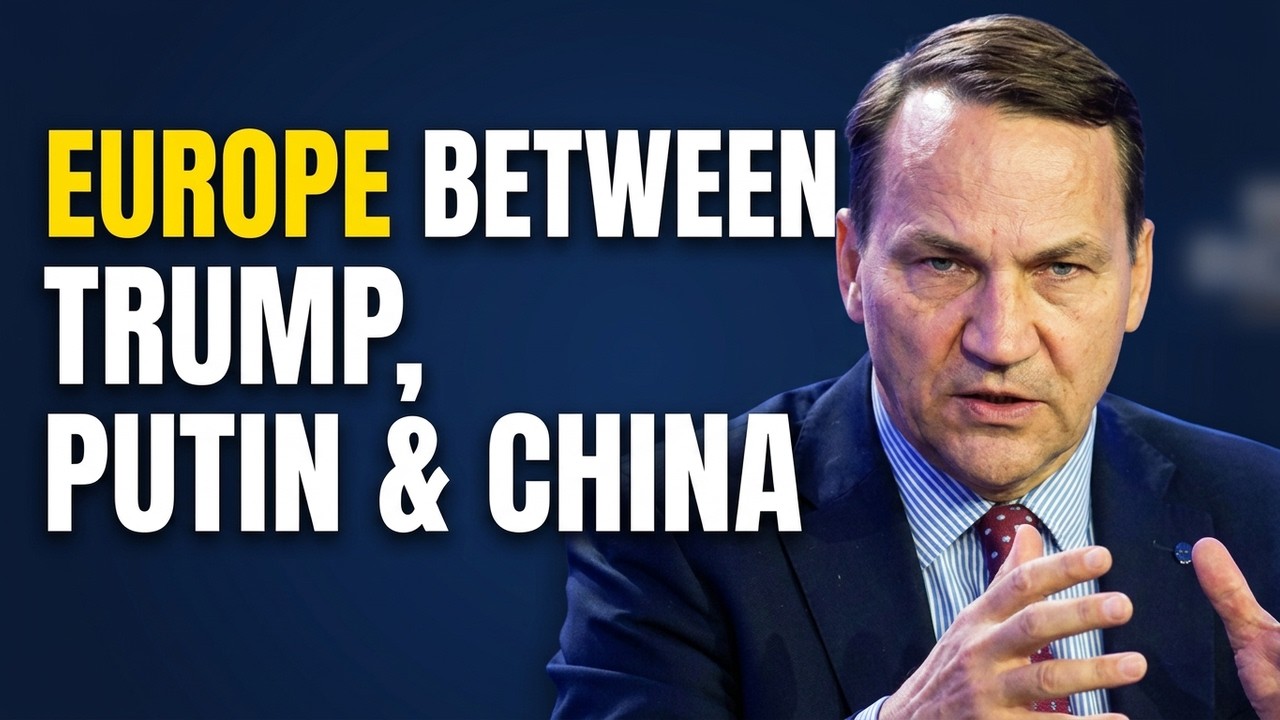
A recent panel discussion at the Warsaw Security Forum, titled “The Return of Power Politics: Europe Between War and Rivalry,” explored Europe’s capacity to shape its future amidst global shifts. Moderated by Katarzyna Pisarska, the debate featured Radosław Sikorski, Johann Wadephul, Espen Barth Eide, and Ed Miliband, addressing critical questions about European security and influence.
Europe’s Stance on Ukraine and Russian Assets
Radosław Sikorski firmly rejected the prospect of returning frozen Russian assets, stating, “over our dead bodies,” and argued that ending the war requires persuading the aggressor to limit its ambitions. Johann Wadephul conveyed that Russia “right now is not ready for ceasefire,” following his conversation with Sergey Lavrov. Ed Miliband emphasized that Putin “is not winning this war” and called for a broad energy ceasefire, stronger sanctions, and continued support for Ukraine. The panel also discussed Ukraine’s request for 300 Patriot missiles, with responses focusing on defensive support without announcing specific delivery quantities.
Strengthening European Defence and Addressing Hybrid Threats
Espen Barth Eide acknowledged gaps in responses to hybrid warfare, noting that “we don’t have the answers” and strongly worded statements are insufficient. Sikorski highlighted €150 billion in loans for member states’ defence industries and discussed sharing legal risks associated with frozen Russian assets, aiming to bolster European defence capabilities.
Economic Security and China Dependence
The discussion also touched upon Europe’s economic dependence on China, advocating for trade diversification and a broader shift towards an economy that prioritizes security alongside efficiency. This reflects a growing recognition of critical supply chain vulnerabilities.
Global Power or Tourist Attraction?
Sikorski’s closing argument posed a stark choice for Europe: whether it will emerge as a global power capable of influencing its destiny or be reduced to a supplier of data and tourist attractions. This encapsulates the central challenge of Europe’s future security and influence in a reshaped global order.
What was Radosław Sikorski’s key message on Russian assets?
Radosław Sikorski strongly opposed the return of frozen Russian assets, stating, “over our dead bodies,” and argued that ending the war requires persuading the aggressor to limit its ambitions.
What challenges did the panel identify regarding European security?
The panel identified challenges including Russia’s unwillingness for a ceasefire, gaps in responding to hybrid warfare, the need to strengthen European defence, and economic dependence on China.
What was the central question posed about Europe’s future?
Sikorski’s closing argument questioned whether Europe will become a global power or be reduced to supplying data and tourist attractions, highlighting its future security and influence.