
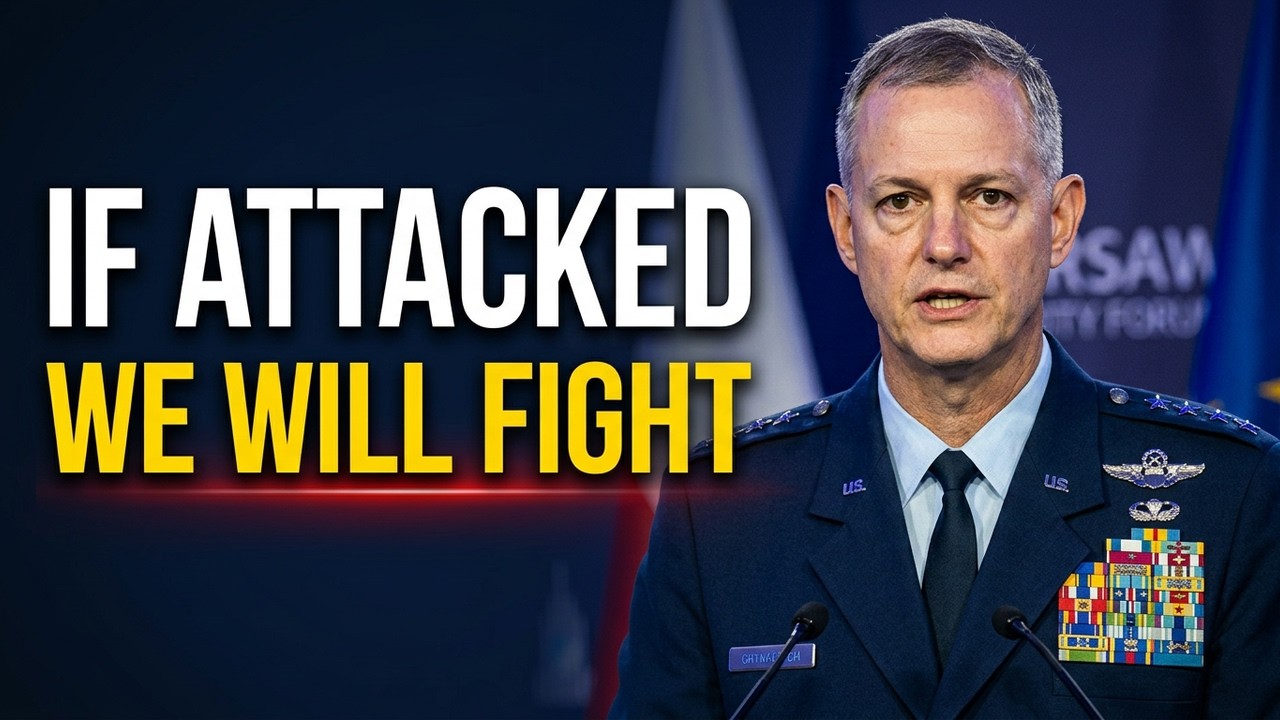
At the recent Warsaw Security Forum, General Alexus Gregory Grynkewich, NATO’s Supreme Allied Commander Europe (SACEUR), unveiled his “theory of victory” for deterring and effectively stopping any attack on Allied territory. While stressing that he does not consider conflict imminent or inevitable, Gen. Grynkewich outlined a robust denial defence strategy, primarily focused on deterring and defending against potential aggression from Russia, ensuring any assault against a NATO member would prove futile.
NATO’s “Block, Blunt, Break” Strategy
Gen. Grynkewich’s theory is built around a three-step denial defence: block an initial assault, blunt any continued advance, and, if necessary, break the attacking force and its supporting warfighting system. This comprehensive approach would leverage NATO’s full spectrum of capabilities, including land, air, maritime, space, and cyber. The strategy emphasizes combining precision weapons with affordable systems that can be fielded at scale, aiming to halt an attack and prevent the seizure of Allied territory, rather than imposing a strategic defeat on an adversary.
During a discussion moderated by Warsaw Security Forum Chair Katarzyna Pisarska, Gen. Grynkewich explained his decision to present this theory publicly. Amid rising public anxiety, sabotage, and arson incidents, he seeks to reassure Allied citizens and issue a clear warning to potential attackers. He linked his theory directly to NATO’s broader Deterrence and Defence of the Euro-Atlantic Area strategy, which has been agreed upon by all 32 Allies. He asserted that visible readiness is key to preventing conflict and that any burden of escalation would fall squarely on an attacker, not NATO. “We will, in short, ensure any attack against any ally proves utterly futile,” he stated, adding, “I do not assess that conflict is imminent or inevitable.”
Addressing Contemporary Challenges
The conversation also touched upon the possibility of simultaneous crises in Europe and the Asia-Pacific, highlighting the need for NATO to be prepared for complex scenarios. Gen. Grynkewich underscored the critical importance of sustaining military operations through robust defence production, emphasizing that the defence industry must be capable of sustaining a prolonged fight, not merely supplying initial equipment. He also addressed the status of NATO’s stockpiles, a crucial element for long-term readiness.
The situation in Ukraine featured prominently in the discussion. Gen. Grynkewich assessed Ukraine’s front line as largely stabilised, though he warned that attacks on energy infrastructure could make the upcoming winter difficult for civilians. He credited Ukrainian resilience and noted that NATO is actively learning from Ukraine’s innovative use of drones and electronic warfare in modern conflict. When asked about Allied responses to hostile acts, he advocated for clear attribution when legal requirements are met, continued unwavering support for Ukraine, and coordinated messaging among Allies.
Article 5 and Allied Unity
Katarzyna Pisarska pressed Gen. Grynkewich on the political commitment behind Article 5, NATO’s collective defence clause, and specifically questioned whether U.S. ground troops would defend NATO’s eastern flank. Gen. Grynkewich pointed to the existing presence of American troops in Poland and other parts of the eastern flank, while clarifying that decisions regarding troop deployments are political in nature. He concluded by commending Poland’s significant defence investments and reiterating the paramount importance of Allied unity. “If attacked, we are ready to fight tonight, but we are not complacent,” he affirmed, encapsulating NATO’s dual commitment to readiness and deterrence.
What is NATO’s “Block, Blunt, Break” theory?
It is a three-step denial defence strategy outlined by SACEUR Gen. Alexus Gregory Grynkewich, designed to block an initial assault, blunt any continued advance, and break the attacking force to prevent the seizure of Allied territory.
Why did Gen. Grynkewich make this theory public?
He presented it publicly to reassure Allied citizens amid rising anxiety and incidents of sabotage, and to clearly warn potential attackers that any aggression against NATO territory would be futile.
How does Ukraine’s conflict influence NATO’s strategy?
NATO is learning from Ukraine’s battlefield experiences, particularly its innovative use of drones and electronic warfare, and incorporates these lessons into its defence planning and readiness.
