
European Commission President Ursula von der Leyen used her 2026 State of the European Union address to outline a vision for a stronger, more independent Europe. Her speech focused on the continent’s ability to defend its interests, reduce dependencies, and respond to growing security, economic, and technological pressures, emphasizing that the fate of Europe must remain in the hands of Europeans
.
A New European Security Strategy and ‘Article 4’
Von der Leyen proposed a new European security strategy, warning that cyberattacks, sabotage, arson, and drone incursions are becoming more serious. A central element of this strategy is a call for what she described as Europe’s own Article 4
– an emergency security protocol. This protocol would aim to bring EU member states together to coordinate a response when a country faces a serious security incident below the threshold of armed aggression. Her defence message was direct: Europe will defend each and every single square metre of its territory.
The speech also reiterated Europe’s commitment to Ukraine, with plans to strengthen Ukrainian air defence, including the approved purchase of American Patriot missiles. Von der Leyen called for the development of a cheaper modular missile defence system together with Ukraine and stressed the need for continued pressure on Russia through stronger implementation of existing sanctions.
Addressing China’s Economic Impact
On economic security, von der Leyen highlighted Europe’s trade deficit with China, which has reached €1 billion a day, stating that the so-called second China shock is not approaching, but it’s already here.
She also pointed to Europe’s dependence on China for critical raw materials and indicated that the EU is prepared to use its available tools to rebalance the relationship.
Navigating the Future of Artificial Intelligence
Artificial intelligence was another major focus. Von der Leyen warned that increasingly capable AI models could enable hacking at levels previously considered impossible and raised concerns about self-improving systems. At the same time, she argued that Europe must stay in the AI race and use the technology in areas where it can create real value. In healthcare, her message was clear: AI should empower doctors, not replace them,
highlighting AI-supported cancer screening while insisting that human agency must remain at the centre of Europe’s approach.
Canada: First Associate Member of the EU?
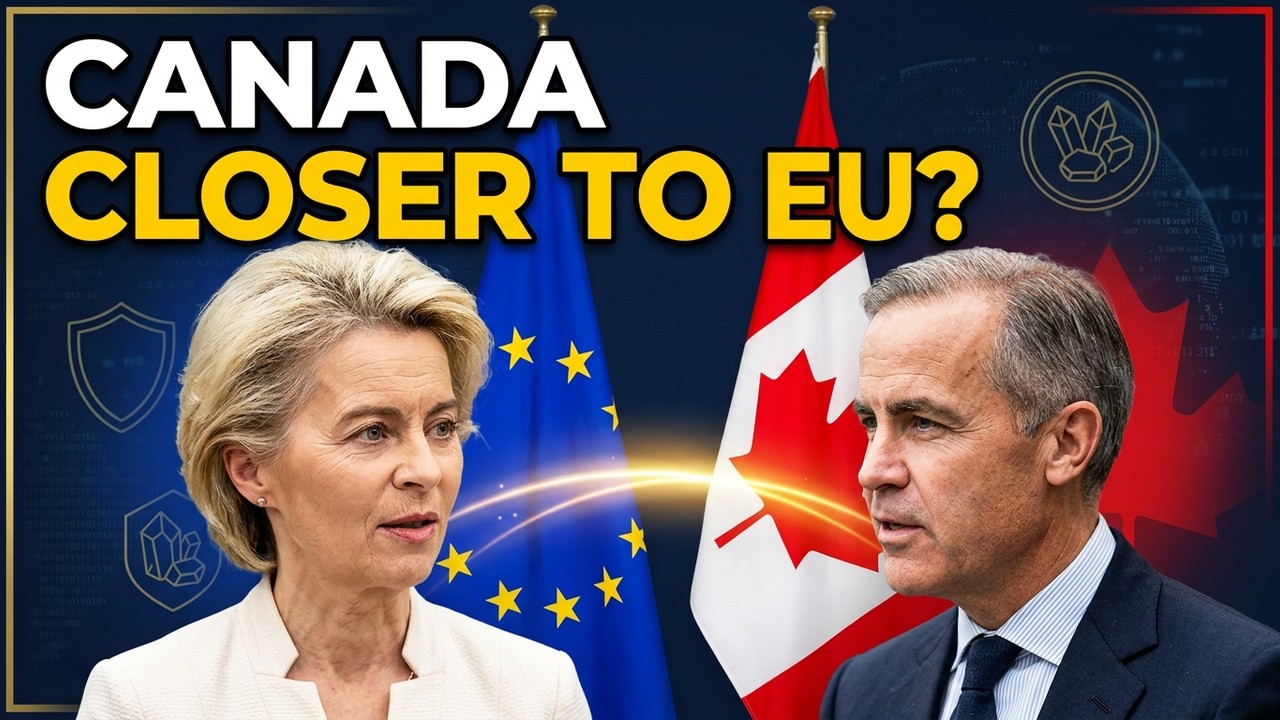
One of the most notable announcements concerned Canada. Von der Leyen called for much deeper EU-Canada cooperation across various sectors, including defence, technology, critical minerals, batteries, AI, quantum, cybersecurity, and economic security. She expressed a desire to work toward opening the door for Canada to become the first associate member of the European Union.
Protecting Youth with the Proposed Kids Act
Domestically, von der Leyen proposed the Kids Act, a significant initiative aimed at protecting younger users online. The Commission wants to implement measures such as no social media under the age of 13, no personal accounts under the age of 15, parental supervision and limited features for younger users, and stronger safety obligations for platforms serving users under 18. Her message to technology companies was unequivocal: It is US who decide the rules, not big tech.
What is Europe’s proposed “Article 4”?
Europe’s proposed “Article 4” is an emergency security protocol that would aim to bring EU member states together to coordinate a response to serious security incidents below the threshold of armed aggression.
What are the key proposals of the Kids Act?
The proposed Kids Act includes measures such as banning social media use under 13, prohibiting personal accounts under 15, requiring parental supervision and limited features for younger users, and imposing stronger safety obligations on platforms serving users under 18.
What is the proposal for Canada’s associate membership?
Ursula von der Leyen called for deeper EU-Canada cooperation across defence, technology, critical minerals, and AI, expressing a desire to work toward opening the door for Canada to become the first associate member of the European Union.
