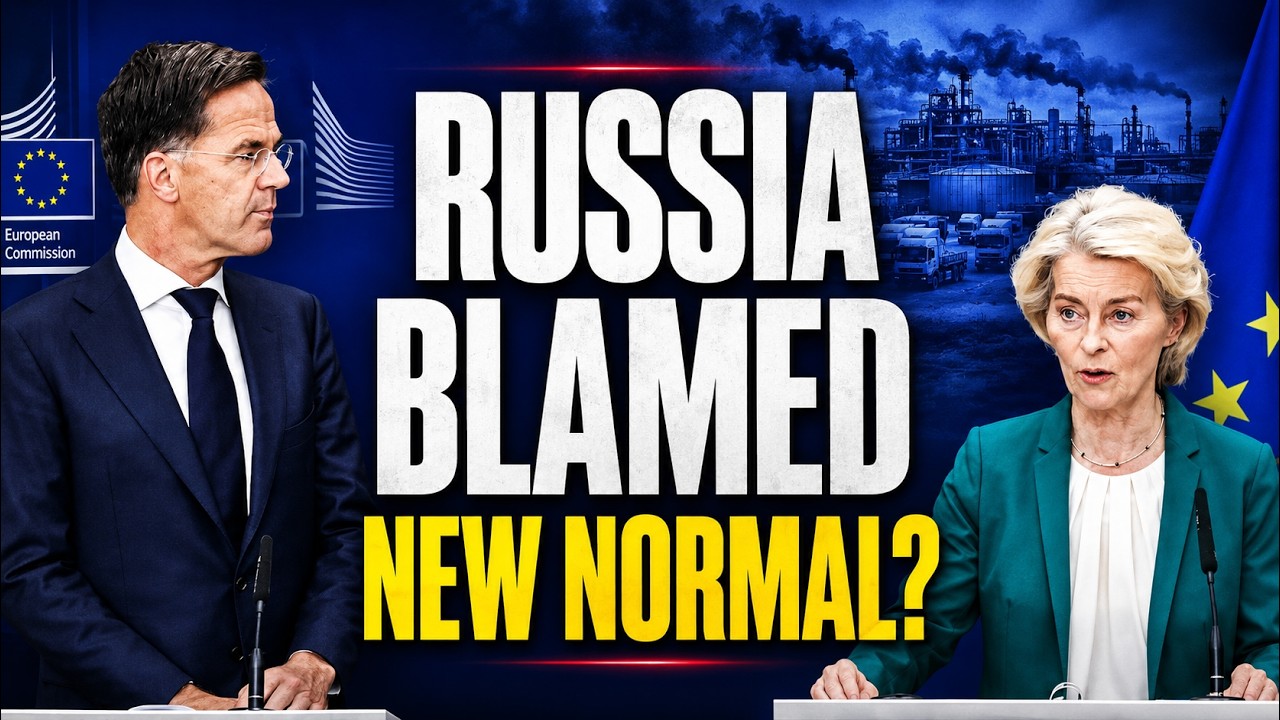
European Commission President Ursula von der Leyen and NATO Secretary General Mark Rutte have presented a united front following Germany’s attribution of an attempted attack at Leipzig/Halle Airport to Russia. The incident, involving “military-grade material,” prompted both leaders to outline a reinforced European security plan, emphasizing unwavering support for Ukraine and increased pressure on Russia.
Responding to a New Escalation
Von der Leyen described the Leipzig/Halle incident as “a new escalation on European Union soil directly attributed to Russia,” warning that a successful attack could have caused significant damage and potential loss of life. She placed it within a broader pattern of Russian hybrid activities, including airspace incursions, drone disruptions at airports, and interference with critical infrastructure. Rutte echoed these concerns, noting an increase in drones and missiles entering Allied airspace along NATO’s eastern flank, alongside hostile activities targeting NATO territory, such as fires at factories producing defence equipment for Ukraine.
Both leaders stressed that Europe has entered a more dangerous security environment, necessitating better protection for civilian and critical infrastructure. Von der Leyen stated, “Europeans are faced with the hard truth that this is the new normal.”
Strengthening Sanctions and Air Defence
In response to these threats, von der Leyen indicated that Europe must be able to react more swiftly. She suggested that further sanctions could be prepared for dangerous acts once responsibility is attributed, noting that European foreign ministers were discussing new listings. The Commission is also examining ways to further reduce Russia’s resources for its war. Von der Leyen affirmed, “We will not tolerate it.”
Air defence emerged as a central issue. Von der Leyen confirmed a new Ukrainian payment request for several billion euros, specifically for air-defence capabilities, including advanced Patriot systems. Member states are still considering this request, though discussions are moving “in the right direction.”
Europe’s Defence Investment Push
The EU is also advancing a broader defence investment push. Von der Leyen highlighted a proposed €800 billion European defence investment plan, including €150 billion through SAFE, arguing that stronger European defence investment bolsters both NATO and Europe’s industrial base. She noted that a €90 billion support loan for Ukraine is already in use, with €8.5 billion issued since June for drones and missiles.
Rutte underscored the close cooperation between NATO and the EU on defence spending, industrial capacity, and support for Ukraine. He reported that European Allies and Canada had added more than $139 billion in defence spending in 2025. Allies have also agreed to provide at least €70 billion for Ukraine this year and the same amount next year. Rutte emphasized, “Our unity is unshaken,” adding, “The dangers Russia poses are clear.”
What was the Leipzig/Halle Airport incident?
Germany attributed an attempted attack involving “military-grade material” at Leipzig/Halle Airport to Russian operatives. European Commission President Ursula von der Leyen described it as a “new escalation on European Union soil.”
What is Europe’s response to the increased security threats?
European leaders Ursula von der Leyen and Mark Rutte outlined plans to strengthen Europe’s security posture, prepare additional sanctions against Russia, boost air defence capabilities for Ukraine, and increase overall European defence investment.
How much is Europe investing in defence?
The European Commission has proposed an €800 billion European defence investment plan, including €150 billion through SAFE. Additionally, European NATO Allies and Canada have committed over $139 billion in additional defence spending for 2025.