
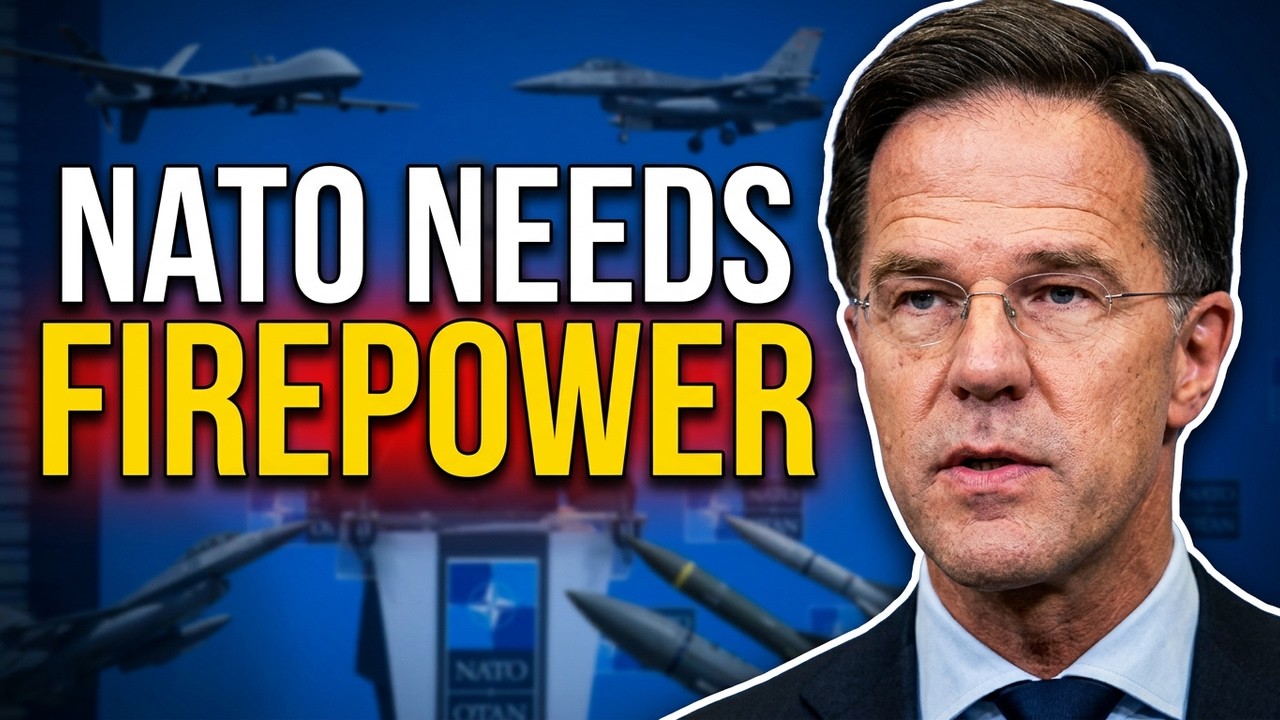
NATO Secretary General Mark Rutte has called for a significant mobilization of the transatlantic defense industry, urging companies to boost production, accelerate innovation, and deliver capabilities faster to strengthen collective defense. Addressing the Transatlantic Defense Industry Access Forum, Rutte emphasized the critical need for a robust industrial base in an increasingly dangerous global security environment.
Rutte Calls for Increased NATO Defense Production
Speaking to industry representatives from the United States, Belgium, and other NATO countries, Mark Rutte outlined NATO’s push to expand defense production across Europe, Canada, and the United States. He stressed that the Alliance requires companies to produce “more of everything” necessary for security, including fighter jets, tanks, drones, counter-drone systems, space capabilities, and other advanced technologies. Rutte stated, “We need your companies to thrive and produce more, basically more of everything that is required to keep our people safe.”
Rutte highlighted the importance of concrete agreements over “generic intentions,” stating, “We don’t need generic intentions. We need really concrete agreements. We need contracts.” He pointed to upcoming NATO industry discussions in Ankara, where he expects Allies to demonstrate tangible progress on combat-ready capabilities, industrial scaling, and specific agreements.
Why NATO Defense Production Matters for Europe
The Secretary General presented the transatlantic defense industrial base as a core strength of NATO, arguing that no single country, “not even the US,” can meet security challenges alone. He emphasized the necessity for all 32 NATO countries to combine assets, expertise, and industrial capacity. Rutte underscored that stronger defense production supports NATO’s deterrence, aids Ukraine in its defense, and generates economic growth and jobs on both sides of the Atlantic, describing this as a “defense dividend.” He affirmed, “It is a good business deal for all of us. And it makes us safe and it keeps Ukrainians strong.”
The call for industrial scaling comes amidst a challenging security landscape. Rutte noted that Russia is dedicating 40% of its national budget, equivalent to 10% of its GDP, to defense. He also highlighted China’s projected increase to 1,000 nuclear warheads by 2030 and its heavy investment in military technology. Strengthening NATO’s industrial capacity is thus crucial for maintaining a credible deterrent.
Key points
- Mark Rutte, as NATO Secretary General, addressed the Transatlantic Defense Industry Access Forum.
- He urged faster production of fighter jets, tanks, drones, counter-drone systems, space capabilities, and other defense technologies.
- Rutte cited the NATO Summit in The Hague, where Allies committed to a major increase in defense spending, aiming for 5% of GDP for defense. He called this a “defining moment” for the transatlantic alliance.
- The next NATO summit in Ankara is expected to focus on combat-ready capabilities and industrial scale-up, not just financial commitments.
- Rutte emphasized collective action, stating, “Not even the US can do it on its own, so we need to do it collectively.”
- Examples of transatlantic industrial cooperation include RTX and MBDA opening a Patriot missile manufacturing facility in Europe in September, and MSM Group building an artillery ammunition production line in Iowa starting in 2029.
What to watch next
The focus will be on the upcoming NATO summit in Ankara, where Allies are expected to translate Rutte’s calls into concrete agreements and deliverables. The Alliance’s ability to secure contracts and scale up production will be key indicators of progress in strengthening its industrial base and deterrence posture. Rutte’s message is clear: “When you, all of you, produce more, our deterrence and defense posture is stronger and we are all safer.”
What is NATO’s current focus for its defense industry?
NATO is focused on expanding defense production across Europe, Canada, and the United States, emphasizing the need for more innovation, faster delivery, and increased output of essential military capabilities like fighter jets, tanks, and drones.
Why is NATO seeking to strengthen its industrial base now?
NATO aims to strengthen its industrial base due to a more dangerous and competitive security environment, including significant defense spending by Russia and China’s military advancements. This is crucial for deterring adversaries, supporting Ukraine, and protecting its member states.
What did Mark Rutte say about defense spending commitments?
Mark Rutte referenced the NATO Summit in The Hague, where Allies reportedly committed to a major increase in defense spending, aiming for 5% of GDP for defense, which he described as a “defining moment.”