
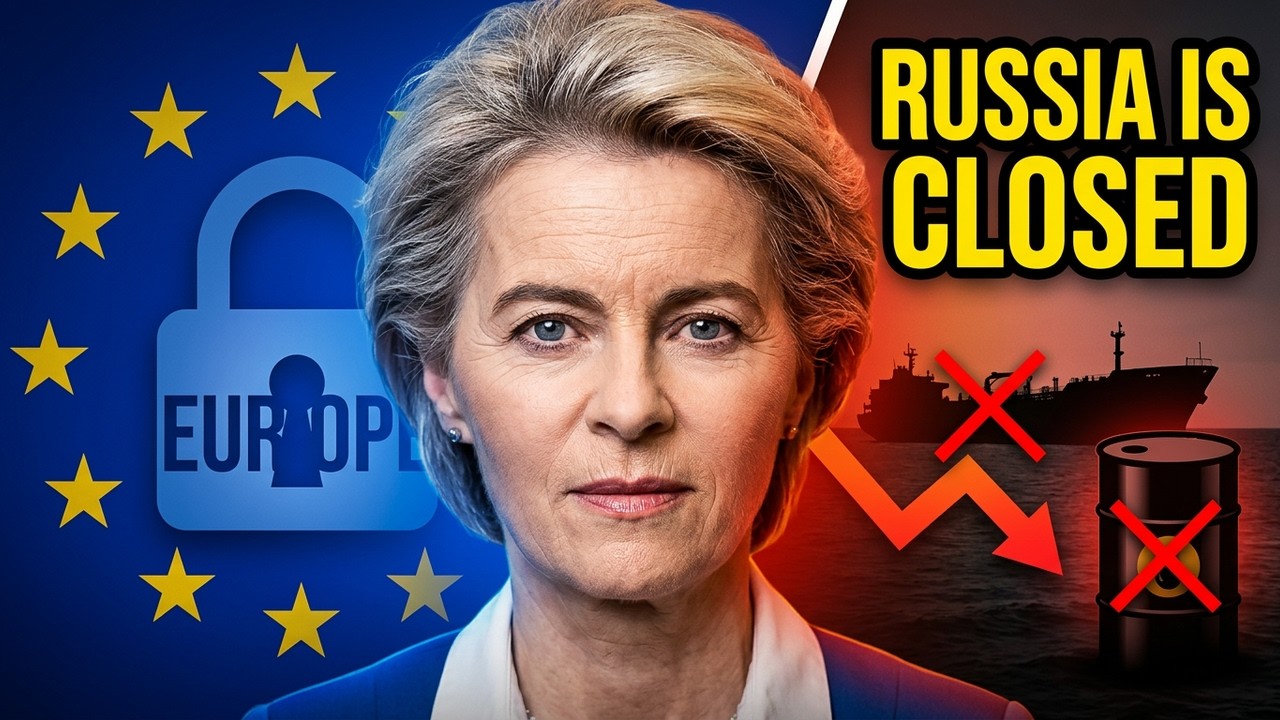
European Commission President Ursula von der Leyen has unveiled the proposed 21st EU sanctions package against Russia, outlining a series of new measures aimed at increasing economic pressure on Moscow. The Commission’s announcement underscores a continued effort to weaken the economic foundations of Russia’s war effort in Ukraine, with von der Leyen warning that Russia is paying a rising economic price for its full-scale invasion.
According to von der Leyen, Russia’s economy is experiencing a sharp slowdown, with inflation nearing 6 percent and interest rates at 14.5 percent. Taxes are reportedly rising, and more than two-thirds of the liquid assets within Russia’s sovereign wealth fund are said to be depleted. She also noted a significant decline in Russia’s energy revenues, which reportedly fell by around 40 percent in early 2026, attributing this trend to the impact of existing EU sanctions.
Key Elements of the Proposed EU Sanctions Package
The proposed package focuses on several critical areas, including energy, financial services, crypto assets, trade, fisheries, and measures to counter sanctions evasion. Brussels is seeking to tighten existing restrictions and introduce new ones to close potential loopholes.
Energy Sector Measures
- The EU proposes pausing the adjustment mechanism of the Russian oil price cap until January next year. This measure follows global energy market disruptions linked to the Strait of Hormuz.
- Further restrictions could target LNG tanker sales to Russia and oil infrastructure tied to Russian exports.
- The Commission also proposes listing 30 more vessels, adding to the 632 already sanctioned within Russia’s shadow fleet network. Restrictions would also expand to ships, ports, airports, refineries, traders, and processors reportedly assisting Russian oil flows.
Financial Services and Crypto Assets
- The package aims to expand transaction bans to 31 additional Russian banks.
- It would also target 20 banks, crypto firms, platforms, and oil traders in third countries accused of helping sanctioned Russian entities evade existing restrictions.
- Reports from Reuters and Euronews suggest the package includes a potential full third-country ban for crypto services used to bypass EU measures, aiming to prevent the use of digital assets for sanctions evasion.
Targeting Russian Soldiers and Fisheries
One of the most notable elements of the proposed package is an EU entry ban for anyone who has served in the Russian armed forces since the beginning of the war in Ukraine. Von der Leyen stated that Europe should remain “off-limit” to those who participated in the invasion.
In a new area of sanctions policy, the package also targets Russian fisheries for the first time. This includes proposed restrictions on fish imports and a complete ban on some products, such as cod. Additionally, the measures seek to align Belarus trade restrictions to prevent it from serving as a backdoor for Russian trade.
Military Industry Trade Restrictions
New export restrictions are also being considered, focusing on metals, alloys, drone systems, jamming equipment, launch systems, and other technologies that could be used by Russia’s defense sector.
Support for Ukraine and EU Accession
Alongside the sanctions, Brussels has affirmed its commitment to supporting Ukraine. The Commission says it is delivering almost €6 billion for Ukraine by the end of the month, which includes support for drones and macro-financial assistance. Furthermore, the EU is opening the first cluster of formal EU accession negotiations with Ukraine and Moldova, signaling a significant step in their paths towards European integration.
What to Watch Next
As the proposed 21st EU sanctions package moves forward, observers will be closely watching the negotiation and adoption process among member states. The implementation of these measures, particularly the proposed entry ban for Russian soldiers and the expanded targeting of crypto services, could significantly impact Russia’s ability to sustain its war effort and evade existing restrictions. The ongoing economic pressures on Russia, as highlighted by von der Leyen, suggest that the EU remains committed to its strategy of economic deterrence and support for Ukraine.
Frequently Asked Questions about the EU Sanctions Package
What is the main focus of the proposed 21st EU sanctions package?
The proposed 21st EU sanctions package primarily focuses on tightening economic pressure on Russia across several sectors, including energy, financial services, crypto assets, trade, and fisheries. It also includes a proposed entry ban for Russian military personnel.
How does the package aim to address sanctions evasion?
The package aims to address sanctions evasion by expanding transaction bans to more Russian banks and targeting third-country banks, crypto firms, platforms, and oil traders accused of facilitating evasion. A potential full third-country ban for crypto services is also being considered.
What support is included for Ukraine in this announcement?
The announcement includes a commitment to deliver almost €6 billion for Ukraine by the end of the month, encompassing support for drones and macro-financial assistance. Additionally, the EU is opening the first cluster of formal EU accession negotiations with Ukraine and Moldova.
