
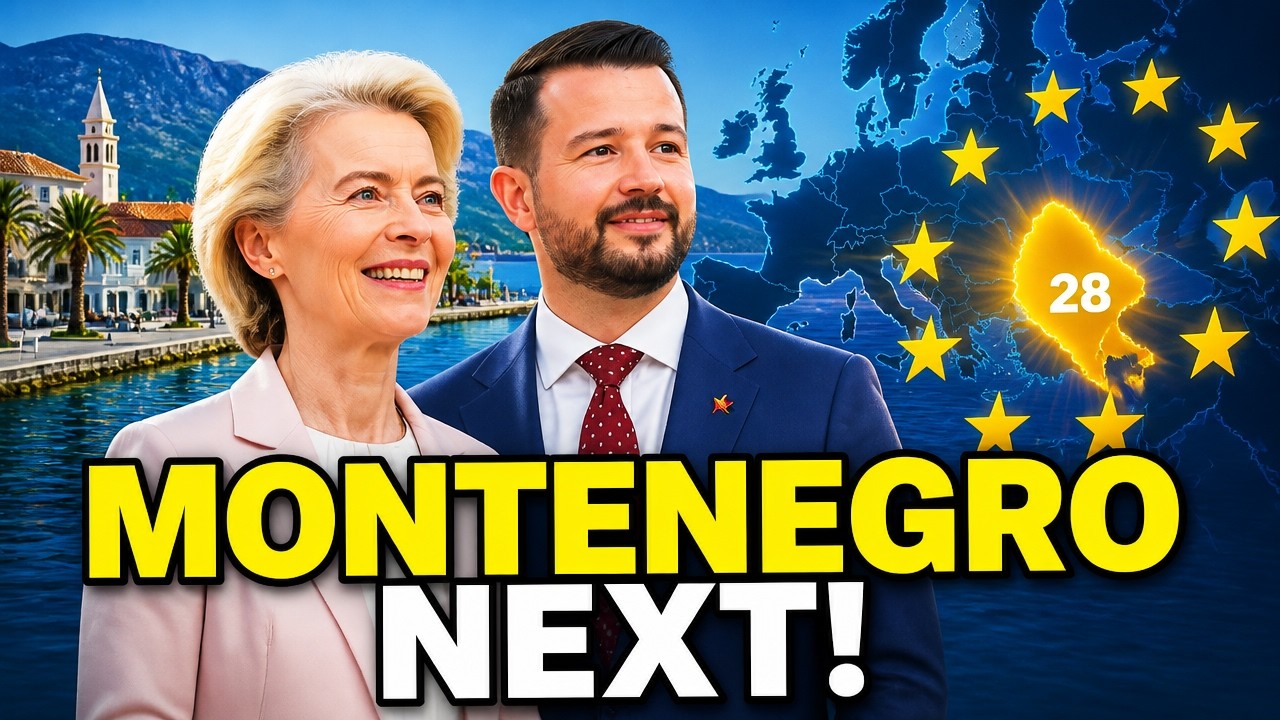
Montenegro is targeting EU entry by 2028, positioning itself as a frontrunner in the Western Balkans’ path towards the European Union. This ambition is supported by Brussels’ significant investments in infrastructure and economic integration, aiming to bring the region closer to the European Single Market.
Montenegro’s Accelerated EU Path
The EU-Western Balkans Summit in Tivat highlighted Montenegro’s clear trajectory towards becoming the 28th EU member state by 2028. Work on its accession treaty is already underway, signaling a strong commitment from Podgorica and Brussels. Leaders like Ursula von der Leyen, António Costa, and Jakov Milatović emphasized the strategy of integrating the Western Balkans into the European Single Market even before full accession.
Deepening Economic Ties and Concrete Benefits
Under the Western Balkans Growth Plan, the EU has already delivered €675 million in investments, with another €540 million tranche expected for projects such as fast internet, railways, kindergartens, and public infrastructure. This initiative is framed as “One Europe, One Market,” a practical roadmap designed to connect the Western Balkans to EU standards, capital, services, and daily opportunities.
A significant step towards economic integration is the planned extension of SEPA (Single Euro Payments Area) to the region. EU leaders suggest that faster and cheaper cross-border payments could save Western Balkan companies around €1 billion, enhancing regional business competitiveness and connection to the EU economy. Additionally, the summit highlighted the planned extension of “roam like at home” benefits, offering citizens and businesses tangible advantages of gradual EU integration even before formal membership. These measures, including SEPA, roaming, and Growth Plan funding, transform enlargement from an abstract political promise into concrete daily benefits.
Contrasting Paths in the Balkans
While Montenegro accelerates its progress, Serbia faces increasing criticism regarding democratic backsliding, media freedom, and rule of law concerns. Since December 2021, Belgrade has not opened a new negotiating cluster, reflecting stalled reforms and growing EU frustration. The Tivat summit thus became a symbol of two distinct paths in the Balkans: one moving swiftly towards Brussels, and the other encountering obstacles in its reform process.
Geopolitical Context and Full Membership Goal
Discussions at the summit also touched upon broader geopolitical issues. EU leaders reaffirmed full support for Volodymyr Zelenskyy’s peace initiative and backed efforts to unblock Ukraine’s accession process within the coming weeks. On China, the European Commission maintained its stance of de-risking, not decoupling, aiming to reduce strategic vulnerabilities while keeping cooperation channels open.
Regarding debates around partial or associated membership, Montenegro’s position is clear: Podgorica is not asking for second-class status. The country is working towards full EU membership, a full accession treaty, and a full seat at the table. While the Franco-German enlargement discussion may influence future safeguards and institutional reforms, Montenegro’s stated goal remains full EU membership by 2028.
What is the Western Balkans Growth Plan?
The Western Balkans Growth Plan is an EU initiative providing significant investments, including €675 million already delivered and another €540 million expected, to connect the region to EU standards, capital, and services through projects like fast internet, railways, and public infrastructure.
How will SEPA integration benefit the Western Balkans?
SEPA (Single Euro Payments Area) integration is expected to enable faster and cheaper cross-border payments, potentially saving Western Balkan companies around €1 billion and making regional businesses more competitive and connected to the EU economy.
What is Montenegro’s target for EU membership?
Montenegro aims to become the 28th EU member state by 2028, with work on its accession treaty already in progress, pursuing full EU membership rather than partial or associated status.
