
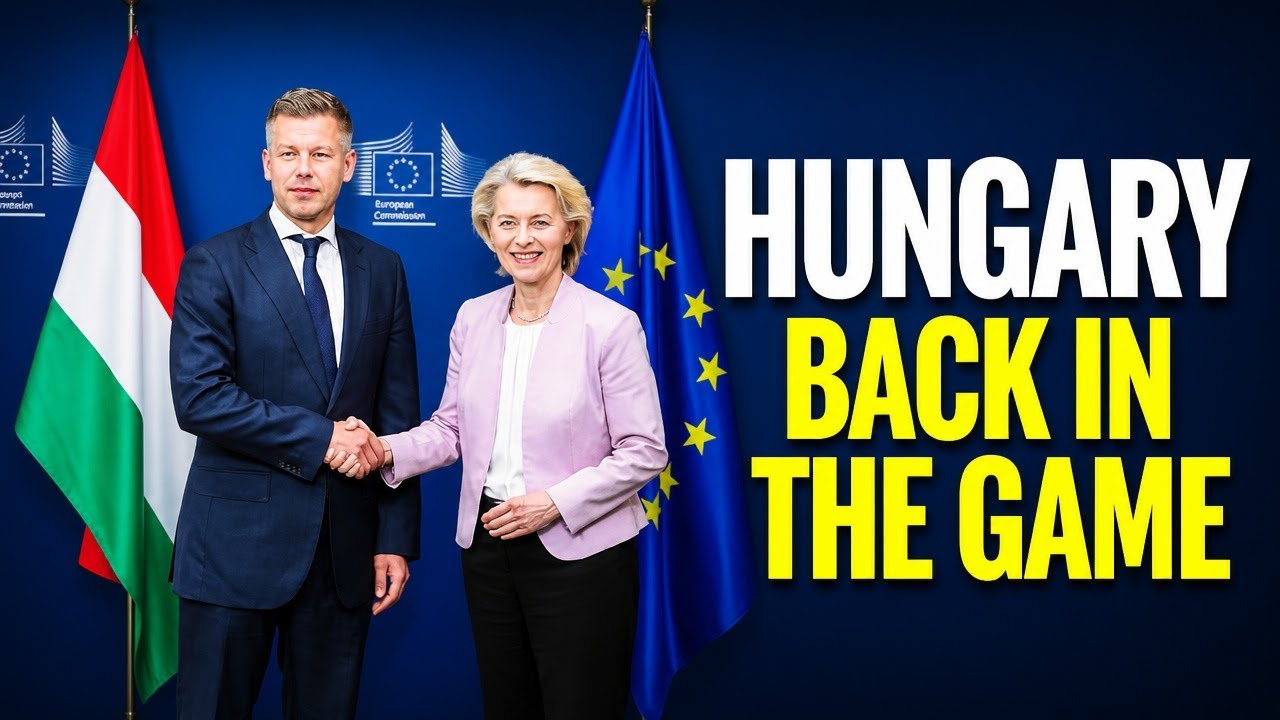
Hungary Back in the Game: Magyar, von der Leyen, and the €16.4B EU Cash Deal
Hungary has entered a dramatic new phase in its relationship with the European Union, signaling a potential radical comeback. This pivotal moment arrived as European Commission President Ursula von der Leyen welcomed new Hungarian Prime Minister Péter Magyar in Brussels. Von der Leyen framed the meeting as the dawn of a new era, asserting that Hungary had chosen “Europe” and “democracy” after years of confrontation under the previous leadership of Viktor Orbán. Magyar echoed this sentiment, presenting the talks as a historic breakthrough, signifying Hungary’s return to the “heart of the Union” and an end to the political isolation that previously defined Budapest’s disputes with Brussels.
A Monumental Financial Package Within Reach
The potential financial package on the table is truly enormous: a staggering €16.4 billion in EU funding could become available to Hungary, provided it successfully completes the required reforms. This substantial sum is broken down into several critical components. Approximately €10 billion is earmarked under the Recovery and Resilience Facility (RRF), encompassing both grants and loans designed to bolster Hungary’s economic resilience and recovery. Additionally, €4.2 billion in cohesion funding is anticipated, aimed at reducing regional disparities and fostering economic growth across the country. A further €2.2 billion is specifically linked to academic freedom, underlining the EU’s commitment to fundamental values. Von der Leyen also highlighted the eagerly awaited return of Hungarian students to the popular Erasmus programme, describing it as one of the great symbols of European unity and cooperation.
Conditions Precede Cash: A Strict Reform Agenda
However, the narrative extends beyond merely the impressive sum of money; the true story lies in the stringent conditions attached to it. Brussels officials have made it unequivocally clear that this is not a final cash transfer but rather a political agreement firmly tied to a strict reform deadline: August 31, 2026. Péter Magyar has committed to implementing tougher anti-corruption measures, which are central to unlocking these funds. These reforms include significantly stronger asset declarations for public officials, with the serious consequence of possible two-year prison sentences for intentionally false declarations. Furthermore, there is a commitment to the phased out of controversial Public Interest Trusts (PITs), which have been a point of contention regarding governance and transparency. Crucially, Hungary has also pledged to join the European Public Prosecutor’s Office (EPPO), a move seen as vital for tackling misuse of EU funds. It’s important to note the financial implications of past delays: around €2 billion in EU money has reportedly already been permanently lost due to expired deadlines, with additional funding remaining frozen over unresolved EU legal concerns and rule of law issues.
The Investment Breakdown: Where the Money Goes
- Railways and Public Transport: Nearly €2 billion is expected to support vital upgrades, including new railway vehicles, improved local rail services, and enhanced intercity transport networks. Transport Minister Dávid Vitézy was specifically highlighted by Magyar during the press conference, underscoring the significance of this sector.
- Energy and Grid Development: Approximately €1.5 billion is planned for substantial electricity grid upgrades, fostering the expansion of solar energy and wind power, boosting storage capacity, and developing balancing systems. These investments are aimed at lowering energy costs for both Hungarian companies and households, contributing to a greener and more affordable energy future.
- Housing Crisis: Several hundred million euros could be allocated to comprehensive housing programmes. Magyar expressed confidence that private investment could significantly multiply the impact of these funds, potentially leading to the construction of thousands of new apartments across the country.
- Small and Medium-Sized Enterprises (SMEs): EU-backed grants and credit programmes are anticipated to provide crucial support for Hungarian SMEs, enhancing their competitiveness, fostering job creation, and driving overall economic recovery.
- Education, Research, and Academic Freedom: Around €2.2 billion is directly linked to strengthening education, research, and development initiatives, alongside implementing reforms specifically designed to address long-standing concerns regarding academic freedom.
- Health Care, Social Services, and Regional Development: Cohesion funding is expected to support essential services in transport, health care, social care, and environmental protection, with a particular focus on developing and assisting poorer regions within Hungary.
