
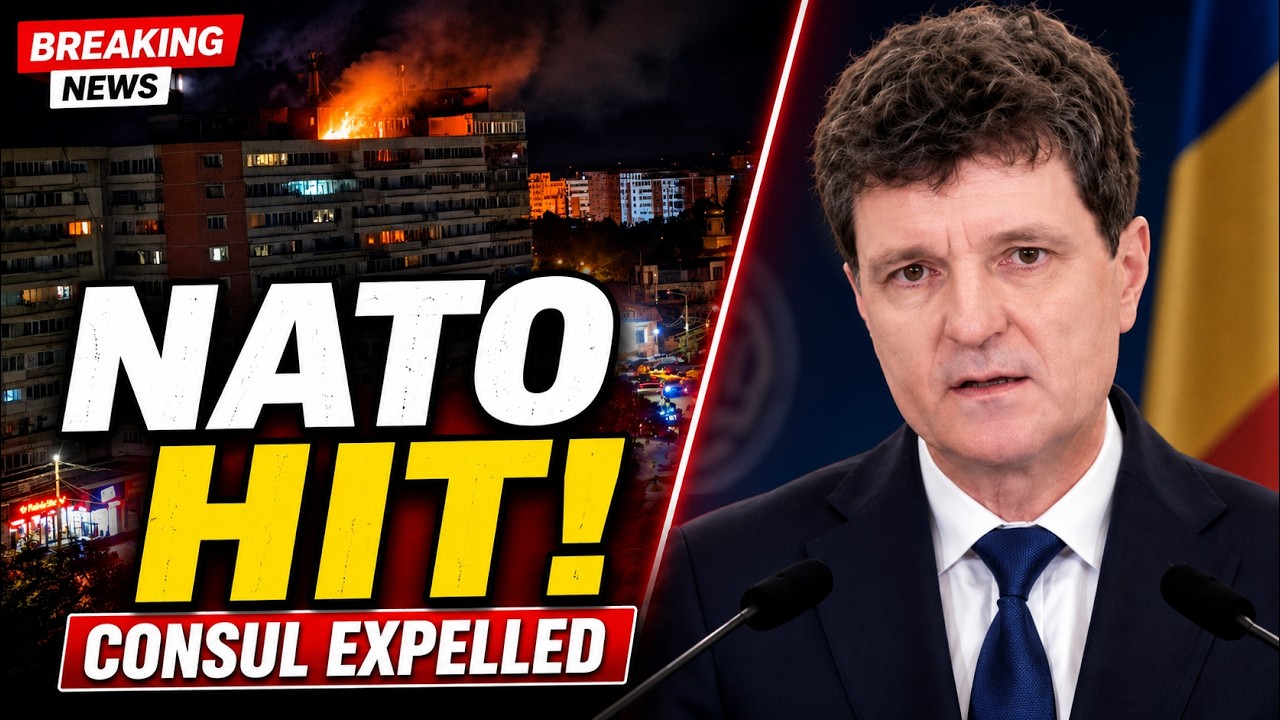
Russian Drone Strikes NATO Territory: Woman and Child Injured in Romania
In an alarming escalation on NATO’s eastern flank, a Russian Geran-2 kamikaze drone crashed into a residential apartment block in Galati, Romania, during the early hours of Friday, May 29, 2026. This unprecedented incident occurred amidst a broader Russian assault targeting Ukraine’s Danube port area, sending shockwaves across the Alliance. Romanian authorities confirmed the drone struck the roof of the building, detonated, and ignited a fire, resulting in minor injuries to a woman and a child. The attack necessitated the immediate evacuation of approximately 70 residents, damaged several vehicles, and prompted the deployment of emergency teams to secure the site.
Reuters reported that Romanian radar systems meticulously tracked the Russian drone’s incursion into national airspace before its impact within the NATO member state. This marks the first instance since Russia’s full-scale invasion of Ukraine that a drone has directly hit a densely populated area in Romania, causing civilian casualties. The incident underscores the severe and growing threat posed by Moscow’s aggression, directly challenging the security of Allied nations.
Immediate Response: F-16s Scrambled and Diplomacy Ignited
Romania’s military swiftly activated its defenses. Two F-16 fighter jets were scrambled, supported by a Romanian Air Force helicopter, with pilots authorized to engage hostile objects violating Romanian airspace. Brigadier General Gheorghe Maxim explained that while the U.S.-made Merops anti-drone system is operational in Romania, deploying it over a crowded city was deemed too risky due to the drone’s low altitude flight path and its disappearance from radar over an urban environment. Separately, a second drone was later discovered near Basești in northwestern Romania. Authorities noted this drone had a wingspan of roughly three meters and did not carry an explosive payload, prompting ongoing investigations into its origin and trajectory.
The Galati drone attack triggered an immediate and robust international reaction. NATO Secretary General Mark Rutte unequivocally stated that the Alliance is prepared to defend “every inch” of Allied territory, accusing Moscow of dangerously reckless behavior. European Commission President Ursula von der Leyen declared that Russia had “crossed another line” and affirmed the European Union’s preparation of a 21st sanctions package against Moscow. Echoing these sentiments, EU foreign policy chief Kaja Kallas condemned the drone impact as a serious violation of Romanian sovereignty and European airspace. Romania’s leadership, facing this direct threat, urgently demanded faster delivery of anti-drone systems and stronger Allied support.
Romania’s Firm Stance and Diplomatic Fallout
Romanian President Nicușor Dan addressed the nation, placing full responsibility for the “serious and unprecedented” incident squarely on Russia. In a decisive diplomatic move, he announced that the Russian Consul General in Constanța had been declared persona non grata, and Romania would proceed with the closure of the Russian consulate in that city. President Dan also used his address to criticize certain Romanian political and media figures who sought to rationalize Russia’s actions, emphasizing that the incident served as a stark litmus test, revealing who genuinely upholds pro-Western values and who merely “mimics” that position.
President Dan provided critical details regarding the drone’s origin and path, confirming Romania’s knowledge of its route from Russia, through Ukraine, and into Romanian airspace. He identified the aircraft as a Russian Geran-2 drone, part of a larger group of 43 Russian drones launched, with only one ultimately impacting Romanian territory. He expressed gratitude to EU and NATO partners for their immediate solidarity, asserting that their collective response unequivocally demonstrated unwavering Euro-Atlantic unity.
Tracing the Drone’s Path and Future Defense Strategies
In response to the heightened threat, Romania is actively moving to strengthen its anti-aircraft and anti-drone capabilities through the EU SAFE program. Contracts for these vital systems are anticipated to be signed, with deliveries projected over the next one to two years. President Dan also highlighted a strategic partnership with Ukraine for joint drone production, alongside enhanced cooperation with the United States and the United Kingdom to accelerate drone and anti-drone testing. Until these new systems are fully operational, Romania confirmed that NATO and bilateral partners would deploy additional equipment into the country, bolstering the defense of the NATO eastern flank.
This Russian drone incursion into NATO territory represents a significant moment, compelling the Alliance to re-evaluate and reinforce its defensive posture against a persistent and increasingly aggressive adversary. The Galati drone attack has not only underscored the urgency of advanced defense systems but also solidified the resolve of Romania and its allies to protect their sovereignty and citizens.
