
ECB Keeps Interest Rates Unchanged — But AI Is Quietly Changing Europe’s Economy
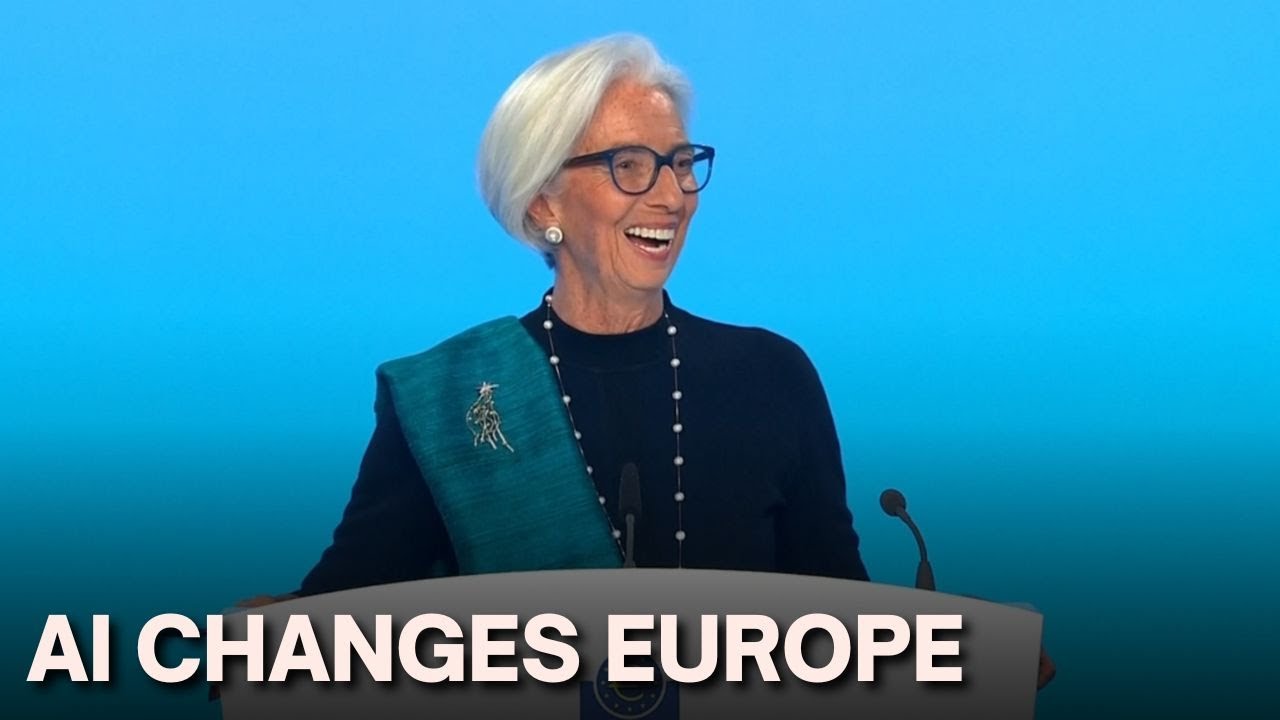
Frankfurt — The European Central Bank (ECB) has decided to keep its key interest rates unchanged, confirming that inflation in the euro area is close to the 2% target. At first glance, the decision looked routine. But during the press conference, ECB President Christine Lagarde signalled something far more important: Europe’s growth model may be starting to change — and artificial intelligence is part of the reason.
This article explains what the ECB decision really means for inflation, wages, growth, and future interest rates, and why AI has entered the central bank’s economic narrative.
ECB interest rates: on hold, with no promised path
The ECB Governing Council unanimously decided to leave all three key interest rates unchanged. Lagarde stressed that monetary policy is in a “good place,” but made it equally clear that this does not mean stability or predictability going forward.
The ECB refused to offer forward guidance. There is no preset path for rate cuts or hikes. Instead, decisions will be taken meeting by meeting, based on incoming data.
This cautious stance reflects one central theme repeated throughout the press conference: uncertainty — driven by geopolitics, trade tensions, financial markets, and wages.
Inflation close to target — but services remain a problem
Headline inflation in the euro area stood at 2.1% in November, close to the ECB’s medium-term target. Goods inflation has continued to decline, reflecting easing supply pressures and weaker demand.
Services inflation, however, is moving in the opposite direction. It rose to 3.5%, driven largely by higher wages. Compensation per employee increased by 4% year-on-year, exceeding previous ECB projections.
According to the ECB, wage growth is expected to slow gradually and fall below 3% by the end of 2026. But policymakers acknowledged they were surprised by the recent strength in wage data — a key reason why services inflation remains elevated.
Growth forecasts revised up — why the ECB is more optimistic
Alongside the rate decision, the ECB revised its economic growth projections higher. Euro area growth is now expected to reach 1.4% in 2025, remain around 1.2–1.4% through 2027, and stay stable into 2028.
What surprised policymakers was not just consumer spending or government investment — but private-sector investment, including from small and medium-sized firms.
For the first time, Lagarde explicitly linked part of this investment surge to artificial intelligence.
AI investment enters the ECB’s economic thinking
Lagarde noted that companies across Europe are investing in:
-
computing capacity and data infrastructure
-
telecommunications networks
-
intangible capital linked to AI deployment
This investment is showing up in surveys and hard data, particularly in the information and communications sector. While the ECB cautioned that it is too early to say whether this represents a permanent structural shift, the signal is clear: AI is no longer just a tech-sector story — it is becoming a macroeconomic factor.
The ECB plans to examine this trend more closely in upcoming projections.
Exports also surprised — despite trade risks
Exports were another upside surprise. Growth was supported by strong performance in chemicals and by exports from Ireland. The ECB initially expected export growth to be temporary, linked to inventory build-ups ahead of possible trade restrictions.
Instead, export strength proved more resilient than expected. Still, the ECB warned that global trade tensions and tariffs remain a likely drag on growth in the coming years.
What this means for future ECB rate decisions
Despite stronger growth and AI-driven investment, the ECB is not signalling higher rates — nor imminent cuts.
Lagarde dismissed speculation about changes in the “natural interest rate,” arguing that current conditions are too unstable to estimate it reliably. With wage pressures, geopolitical risks, and volatile markets still in play, the ECB prefers flexibility over commitment.
In short:
-
Inflation is close to target
-
Growth looks stronger than expected
-
But uncertainty dominates policy decisions
Conclusion: stability today, transformation tomorrow
The ECB’s decision to keep rates unchanged was expected. The real takeaway lies elsewhere.
For the first time, Europe’s central bank is openly discussing artificial intelligence as a driver of economic growth. If this investment wave continues, it could reshape productivity, wages, and eventually the interest-rate environment.
For now, the ECB is holding steady. But Europe’s economic story may be entering a new phase — quietly, and driven by technology rather than stimulus.