
Ukraine Peace Talks: Is the West Pushing Kyiv to Concede? Zelensky, Macron, Kallas and the Trump Envoy
The latest round of Ukraine peace negotiations has intensified debate across Europe and the United States. Key leaders — including Ukrainian President Volodymyr Zelensky, French President Emmanuel Macron, EU foreign policy chief Kaja Kallas and Donald Trump’s envoy Steve Witkoff — are shaping discussions that could define the future of the war and of European security. As diplomacy accelerates, a central question emerges: Is the West pressuring Ukraine to make territorial or political concessions to Russia in order to secure a quick peace?
Kallas Warns of Pressure on “the Victim”
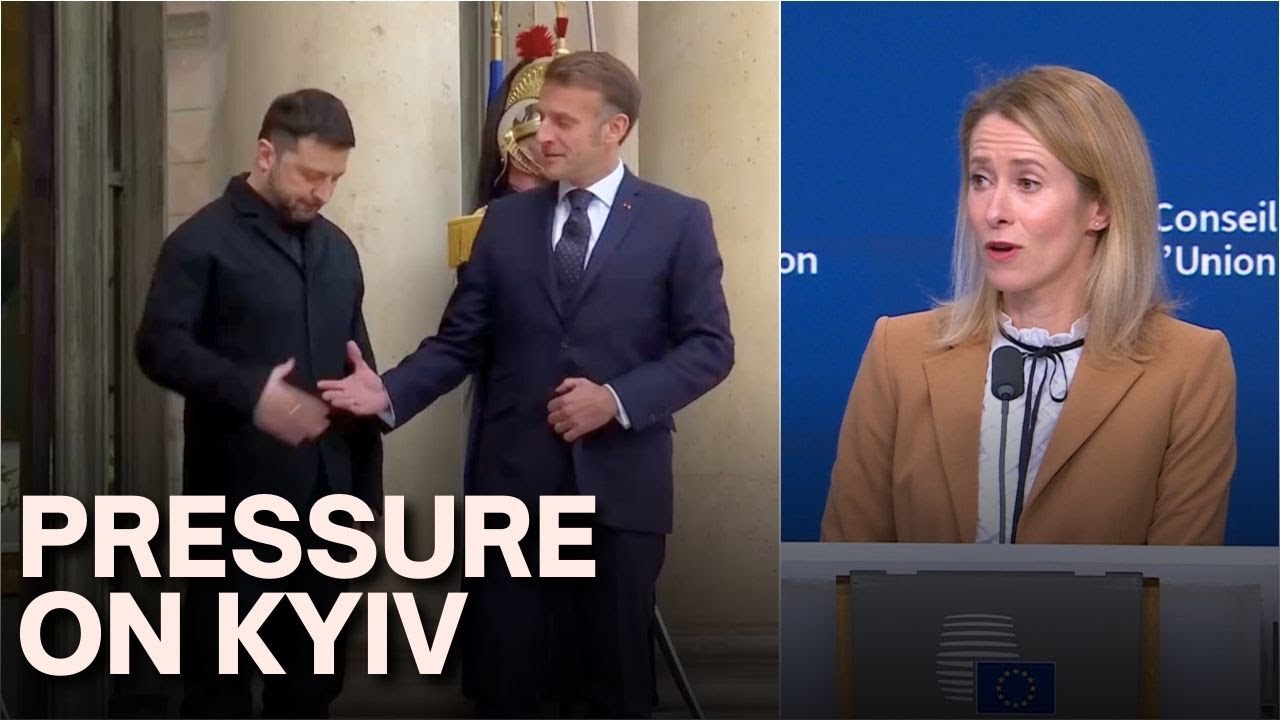
After a meeting of EU defence ministers in Brussels, Kaja Kallas delivered one of the sharpest public warnings so far. She expressed concern that all the pressure in current peace talks is being placed on Ukraine — the victim — instead of on Russia, the aggressor.
According to her, any deal that forces Kyiv into concessions risks rewarding aggression, violating the UN Charter and creating dangerous precedents for global security. Kallas also stressed the importance of long-term EU funding for Ukraine, including the controversial proposal to use frozen Russian assets as a basis for a reparations loan.
Zelensky and Macron Coordinate Ahead of Trump Envoy’s Visit to Moscow
In Paris, Zelensky and Macron held several hours of talks focused on peace negotiations and security guarantees for Ukraine. They joined calls with Trump’s envoy Steve Witkoff, who is set to meet Vladimir Putin in Moscow.
Zelensky emphasised that Ukraine’s priorities remain unchanged: defending sovereignty, securing strong security guarantees, and preventing Russia from being rewarded for its invasion. Macron reinforced that only Ukraine can decide on its territory in any peace agreement, directly addressing fears that Western partners may be considering territorial compromises.
US Peace Plan Under Revision
Reports indicate that the original U.S. peace proposal — initially criticised for offering too many concessions to Moscow — has been revised from 28 points down to 19 after consultations with Ukraine and European partners.
However, several issues remain highly sensitive, including the status of occupied territories, reconstruction payments, and long-term guarantees that would prevent a future Russian invasion.
EU Divisions Over Funding Ukraine
The European Union remains split over how to finance Ukraine’s defence and reconstruction. The European Commission continues to push for using profits from frozen Russian state assets, but key member states, especially Belgium, express legal and financial concerns.
A failure to agree on stable multi-year funding could weaken Kyiv’s negotiation position just as major decisions approach.
What’s at Stake
As diplomatic momentum accelerates, Ukraine faces both mounting battlefield pressure and growing political pressure. The outcome of the U.S.–Russia channel, the position of EU leaders, and the ability to secure long-term financial support will shape whether the eventual peace is durable and just — or fragile and imposed.
——————————————————
*Subscribe to Europe Pulse*
Stay updated with the latest news from Europe.
