Von der Leyen Highlights EU Council Conclusions: Competitiveness, Clean Transition and Urgent Support for Ukraine
#climatechange #eu #putin
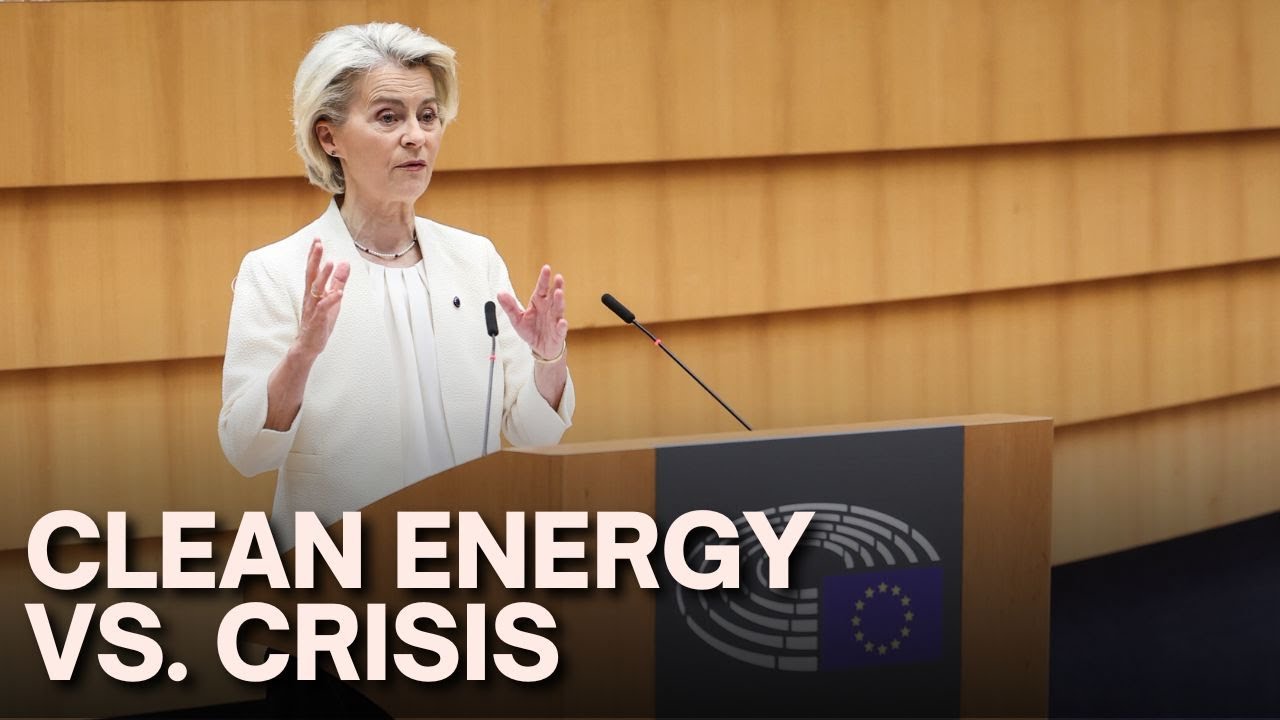
European Commission President Ursula von der Leyen addressed the European Parliament in Brussels during the plenary debate on the Conclusions of the European Council meeting of 23 October 2025, outlining Europe’s strategy for competitiveness, decarbonisation and long-term support for Ukraine. She opened by linking discussions in Brussels with the global momentum at COP30 in Brazil, arguing that Europe must accelerate the clean transition while using it to drive growth. Ten years after the Paris Agreement, she noted that global temperature projections have dropped from 4°C to 2.4°C, a sign that coordinated climate action works — even if the target is still far from safe.
Von der Leyen highlighted the success of the EU Emissions Trading System, stressing that emissions have fallen by 50% while GDP increased by 27%, generating EUR 250 billion for clean technologies and innovation. She emphasised a structural shift in global energy investment: renewables now make up 95% of new energy capacity worldwide, and annual renewable investment has doubled to USD 2 trillion. This shift, she argued, is a profound opportunity the EU must seize.
Competitiveness dominated the October European Council, with leaders identifying high energy prices as a major constraint. The President cited the Draghi Report and stressed the need for more investment, better scale and deeper capital markets. Key initiatives include Choose Europe, the Scale-Up Europe Fund, the Savings and Investment Union, an AI-first strategy, expanded gigafactory production and a proposed 28th regime to reduce single market fragmentation. She welcomed the plan to hold an informal European Council on competitiveness in February, describing the moment as one that requires “all hands on deck.”
Ukraine remained the second major focus of the October summit. Von der Leyen detailed Russia’s intensified attacks on Ukraine’s energy system, including more than 40 missiles and nearly 500 drones launched in a single day. With winter approaching, she warned that President Putin is again trying to “freeze Ukraine into submission.” The EU is responding by stabilising Ukraine’s energy grid with over 2 gigawatts of electricity exports and delivering new anti-drone systems. She stressed that Europe will disperse almost EUR 6 billion today from the ERA loan and Ukraine Facility.
Looking beyond 2025, the European Council committed to covering Ukraine’s financial needs for 2026 and 2027, and the Commission is working with Belgium and Member States on how to implement that pledge. Von der Leyen outlined three financing options: using EU budget headroom to borrow; an intergovernmental approach where Member States raise funds individually; and a reparations loan backed by immobilised Russian assets. The latter would allow Ukraine to repay only if Russia eventually pays reparations. She argued that this mechanism sends Moscow the strongest signal that Europe is committed to Ukraine “for the long haul.”
Von der Leyen closed by insisting that Europe must raise the cost of war for Russia and expose President Putin’s miscalculation that time is on his side. Supporting Ukraine, she said, is central to defending Europe’s freedom, democracy and the international rules-based order. “Long live Europe,” she concluded, reaffirming the EU’s unity and determination following the October European Council.
——————————————————
*Subscribe to Europe Pulse*
Stay updated with the latest news from Europe.
#EuropePulse #BreakingNews #EU #WorldNews #Politics #TrendingNow #NewsUpdate #Analysis #Ukraine #Russia #USA #UK #EuropeanUnion #NATO #WorldEvents #CurrentAffairs #EUnews #TopStories #InternationalNews #Brussels #Leaders #ViralNews #Headlines