
EU “Drone Wall” Moves Forward as Finland Hosts—Ukraine Tapped to Train, Test, and Turbo-Charge EU Air Defense Against Russian Drones
#DroneWall #Ukraine #EUDefense
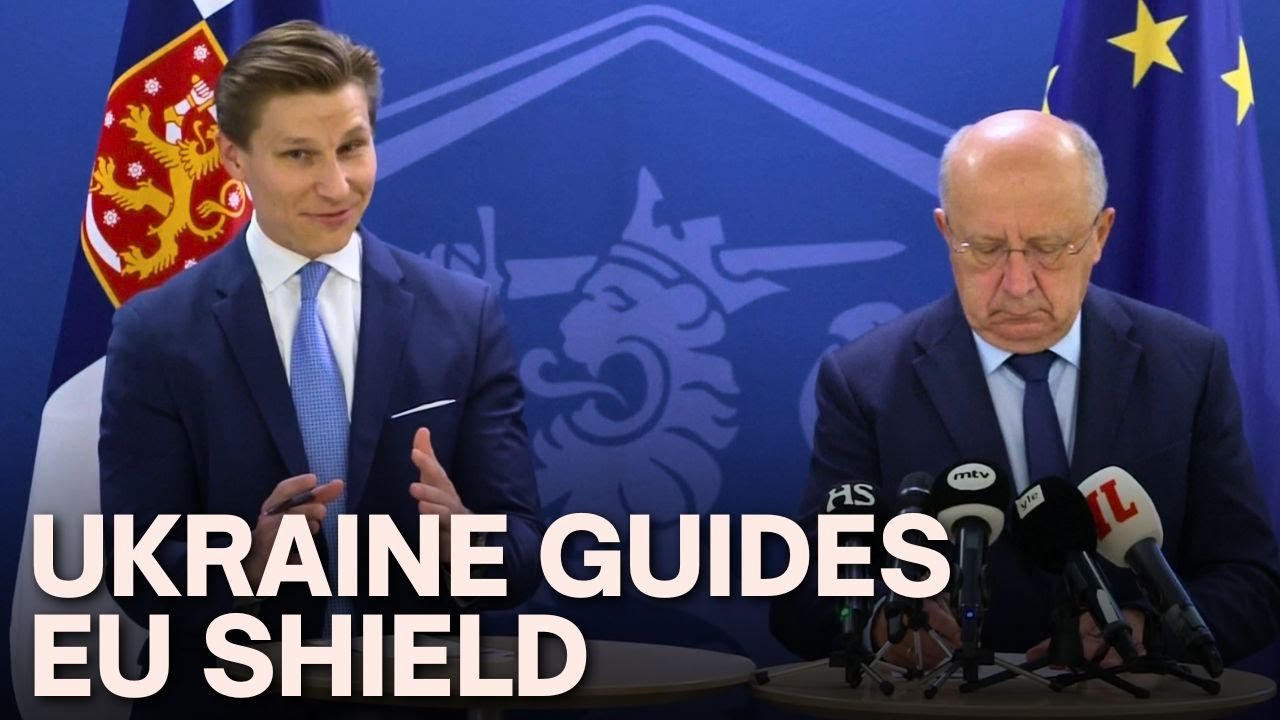
At a joint press conference in Helsinki, European Commissioner for Defence and Space Andrius Kubilius and Finland’s Defence Minister Antti Häkkänen outlined concrete next steps to build an EU-led “Drone Wall” as part of a broader Eastern Flank Watch concept. The project, discussed with defence ministers from Bulgaria, Estonia, Finland, Latvia, Lithuania, Poland, Romania—and joined by Hungary and Slovakia—focuses on countering Russian drone incursions and hybrid provocations. Ukraine’s defence minister briefed the meeting and shared “invaluable battle-tested expertise,” positioning Kyiv as a critical partner for Europe’s rapid learning curve. Kubilius said the Eastern Flank Watch has three pillars: a “ground wall” of anti-mobility measures at borders, a “drone wall” to detect and defeat low-flying UAVs, and a “maritime wall” to protect the Baltic and Black Seas. The immediate priority is a dense, interoperable detection network—low-altitude radars, acoustic sensors, and integrated surveillance grids—areas where Ukraine’s field experience can guide EU deployments.
Officials stressed that Ukraine can help the EU design cost-effective, layered counter-UAS tactics that reflect the economics of the battlefield. That includes electronic warfare jamming to down or divert drones; the use of dedicated drone-on-drone interceptors; and mobile gun teams or short-range air defence for last-mile defeat. Crucially, Kubilius highlighted Ukraine’s unique “ecosystem” of rapid innovation: close links between hardware producers, EW specialists, drone operators, data engineers, and real-time analytics—processes Europe aims to replicate for fast upgrades as Russia adapts. Finland underscored the need to fuse these lessons into a multi-layered air-defence picture spanning ballistic and cruise missiles as well as drones, backed by robust command-and-control.
Finland confirmed national differences will persist, but insisted common standards and joint procurement can accelerate delivery. On financing, Kubilius pointed to existing Safe Loans, the near-finalised European Defence Industry Programme (EDIP), and a new SIAP legal framework to simplify cross-border projects, procurement, and VAT exemptions. He cautioned that leaders must still decide on any dedicated funding line, while noting strong loan demand across Europe—beyond just the eastern flank. To drive momentum, ministers will appoint “sherpas” to draft a conceptual and technical roadmap, with detection networks named as the first urgent build-out.
Asked about timelines, Kubilius said substantial parts of the drone wall could be developed quickly, while avoiding firm dates. Finland declined to detail its own capacities but confirmed heavy investment, citing a €10–15 billion land-forces reform that includes drone defence. Both speakers framed the system as protecting not only borders but critical infrastructure, ports, and airports against hybrid threats, including potential sea-launched UAV provocations. The message was blunt: Russia is testing NATO and the EU; Europe will respond with a united, immediate, and Ukraine-informed shield. As Häkkänen put it, Ukraine is the “key player” in Europe on counter-drone know-how—and the EU intends to learn fast.
——————————————————
*Subscribe to Europe Pulse*
Stay updated with the latest news from Europe.
#EuropePulse #BreakingNews #EU #WorldNews #Politics #TrendingNow #NewsUpdate #Analysis #Ukraine #Russia #USA #UK #EuropeanUnion #NATO #WorldEvents #CurrentAffairs #EUnews #TopStories #InternationalNews #Brussels #Leaders #ViralNews #Headlines
